Company Profile

This case study demonstrates how an established plumbing company with strong reputation but heavy lead aggregator dependency reduced its reliance on shared leads from 45% of call volume to under 20%, replaced that volume with higher-margin direct leads, and built a membership marketing layer that created recurring revenue and protected customer retention.

Client Profile

  • Established residential plumbing company.
  • Charlotte, North Carolina metro area.
  • Five service trucks.
  • Strong community reputation with over 400 Google reviews.
  • Full-service operation.
  • Experienced technicians with high diagnostic-to-repair approval rates when trust is present.

Primary Challenge

  • Despite a strong reputation and extensive review profile, the company was purchasing approximately 45% of its monthly call volume from two lead aggregator services.
  • These shared leads were more expensive per call than the company realized when factoring in lower close rates, price-shopping behavior, and the margin erosion from competing against the same lead with two or three other plumbers.
  • Rising aggregator costs were compressing margins further.

Core Problem Diagnosis

The owner knew aggregator dependency was a problem but was hesitant to reduce volume without a replacement source. The company had invested in organic SEO years earlier but allowed it to stagnate. Paid campaigns existed but were unstructured, running on broad emergency keywords with a generic landing page. The 400+ reviews were a significant asset, but the company was not generating new reviews consistently enough to maintain map pack momentum.

The structural issue was that the company had built a strong reputation in the physical community but had not translated that reputation into digital authority. Its organic presence was weaker than competitors with half the reviews because the website, content hierarchy, and local SEO structure had not been maintained.

The aggregator dependency was a symptom. The root cause was an underdeveloped owned-marketing infrastructure that forced the company to rent lead flow it should have been generating directly.

For full vertical context, see Digital Marketing for Plumbing Companies

Strategic Approach

1. Organic Authority Rebuild

The local SEO infrastructure was rebuilt. Service area structure was clarified. The website content hierarchy was expanded to include dedicated pages for emergency services, replacement work, drain services, and sewer line repair. Internal linking was restructured to consolidate authority upward.

A review velocity program was implemented. Despite having 400+ reviews, new review frequency had slowed to one or two per month. The structured post-service request process increased new review volume to six to ten per month, re-establishing recency signals that strengthened map pack consistency.

2. Direct Paid Campaign Launch

Structured paid campaigns were built to replace aggregator volume directly. Emergency, replacement, and drain service campaigns were segmented with distinct budgets, keyword targeting, and landing pages. The goal was not to increase total marketing spend but to redirect what was being spent on aggregators into owned channels with better margins.

Landing pages were built to leverage the company’s strongest asset: its review profile. Prominent review counts, recent review excerpts, and trust signals were featured on every landing page. This created a conversion experience that aggregator landing pages could not match.

3. Membership Marketing for Recurring Revenue

A plumbing membership program was structured offering annual water heater flushes, drain maintenance, fixture inspections, and priority scheduling. Marketing for the membership was integrated into the website, post-service follow-up, and retargeting campaigns.

Membership sign-ups created several compounding benefits: recurring revenue that smoothed monthly cash flow, a protected customer base less likely to call competitors, a natural channel for identifying replacement opportunities during annual inspections, and improved customer lifetime value from marketing-acquired customers.

Measured Outcomes Over 12 Months

  • Aggregator Dependency: Decreased from approximately 45% of monthly call volume to under 20%. The reduction was phased over six months as direct channels ramped.
  • Direct Lead Volume: Organic and direct paid leads replaced the aggregator volume without total call volume declining.
  • Cost Per Booked Call: Improved. Direct leads converted at higher rates and without the margin compression of shared leads.
  • Close Rate on Shared vs. Direct Leads: Direct leads produced close rates approximately 35% to 40% higher than shared aggregator leads, confirming that owned channels deliver better-quality demand.
  • Membership Sign-Ups: Grew steadily, creating a recurring revenue layer that did not exist before.
  • Map Pack Stability: Improved as review velocity increased and local SEO structure was reinforced.

Why This Case Matters

Many established plumbing companies with strong reputations remain dependent on lead aggregators because their digital infrastructure has not kept pace with their market reputation. The reviews exist. The trust exists. The capability exists. What is missing is the owned marketing system that captures demand directly.

This case demonstrates that reducing aggregator dependency does not mean reducing call volume. It means redirecting marketing investment into channels you control, with better margins, higher close rates, and a compounding return that shared leads will never provide.
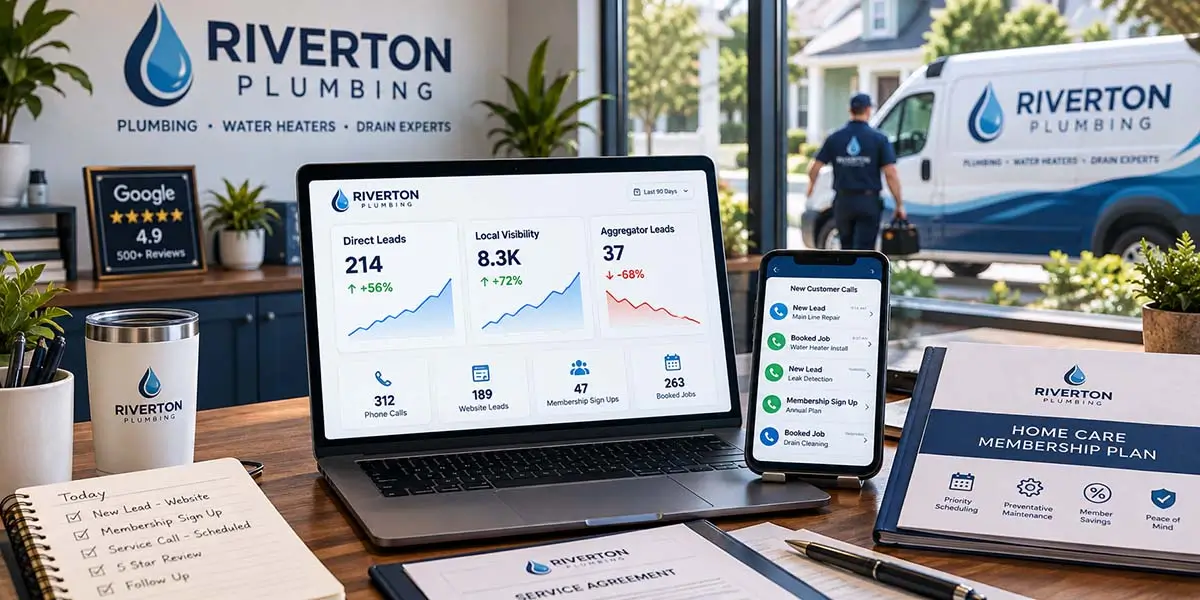

plumbing case study 2 - reducing lead aggregator dependency for plumbing companies

Talk to a Marketing Strategist

If you rely heavily on ads for retail inspection flow, a structured review can identify where organic authority is underdeveloped.

Best for established plumbing companies seeking to grow replacement revenue through structured authority.