Paid Media Strategy for Electrical Contractors
Ad Genius builds paid media strategies for established electrical contractors competing in saturated local markets. Our approach structures campaigns around the trust and safety dynamics of electrical buyer behavior, separates urgent service demand from higher-value project work, and connects ad spend to actual booked revenue rather than lead volume.
Paid Media in Electrical Is an Amplifier, Not a Foundation
Paid advertising for electrical contractors is one of the most mismanaged areas in home service marketing. Most agencies run a single Google Ads campaign targeting broad electrician keywords, send all traffic to a generic homepage or services page, and report on cost-per-click and lead volume as if those numbers tell you anything about whether the money is working.
The problem with that approach is not the channel. Google Ads and Local Service Ads are effective tools for generating electrical demand. The problem is the structure. Electrical contractors serve buyers with fundamentally different levels of urgency, project value, and trust requirements. Running one campaign for all of them is like dispatching the same technician to a tripped breaker and a commercial panel installation with the same equipment, timeline, and pricing approach.
This page covers how paid media strategy should be structured for electrical contractors, how to manage costs across different demand types, and how to connect ad spend to the operational metrics that determine whether marketing is actually growing the business.
Google Local Service Ads for Electrical Contractors
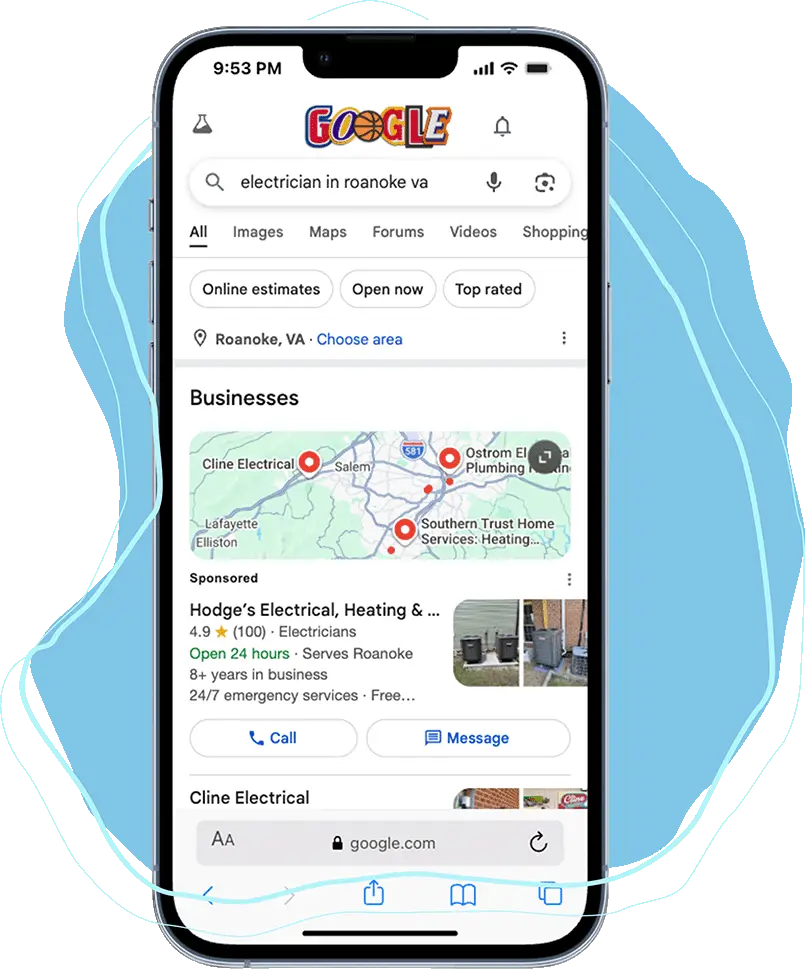
Google Local Service Ads (GLSAs) occupy a unique position for electrical contractors. The Google Guaranteed badge that accompanies GLSA listings directly addresses the primary concern of electrical buyers: trust.
When a homeowner is searching for an electrician to work on their home’s electrical system, the Google Guaranteed badge reduces perceived risk in a way that standard ads cannot. This makes GLSAs particularly effective for electrical contractors compared to trades where trust is less central to the buying decision.
GLSA performance depends on several factors. Review quality and volume directly impact ranking. Response time to leads affects lead quality and Google’s willingness to send more. Profile completeness, including licensing verification and service category accuracy, determines which searches trigger your listing.
The most common mistake electrical contractors make with GLSAs is treating them as a set-it-and-forget-it channel. Leads need to be responded to quickly. Dispute processes need to be used when leads are unqualified. And the profile needs to be maintained with the same attention given to a Google Business Profile.
Retargeting and Branded Campaigns
Not all paid channels behave equally in roofing markets.
Retargeting
Electrical buyers, especially those researching planned projects, often visit multiple websites before making a decision. Retargeting keeps your business visible to buyers who visited your site but did not convert on the first visit.
For electrical contractors, retargeting works best on project-level searches. A homeowner researching panel upgrades who visited your dedicated panel upgrade page but did not call is a high-value retargeting audience. The ad creative should reinforce trust and credibility, not push discounts.
Retargeting budget for electrical contractors is typically a small percentage of overall paid spend, but it captures demand that would otherwise be lost to competitors who happened to be the last business the buyer saw.
Branded Campaigns
Branded search campaigns protect your business name in search results. If a buyer searches for your company name after seeing a truck, a review, or a referral, you want to control what they see. Without a branded campaign, competitors can bid on your name and redirect that buyer.
Branded campaigns for electrical contractors are low-cost and high-conversion. They are a defensive measure that ensures referral traffic and reputation-driven searches land where they should.
Protecting Cost Efficiency in Competitive Markets
In storm-driven markets, cost per click and cost per lead fluctuate dramatically. Contractors who measure success only by volume often overlook deteriorating close rates and rising acquisition costs.
Paid media performance in roofing must be evaluated against:
- Cost per inspection
- Cost per signed contract
- Lead-to-inspection conversion rate
- Speed to contact
- Revenue per crew
When close rate declines due to poor lead quality or overwhelmed intake systems, paid efficiency collapses. Marketing then appears expensive, when the breakdown is actually operational.
Paid media strategy must protect against that cascade.

Seasonal and Urgency Dynamics
Electrical demand has seasonal patterns, though less pronounced than HVAC or roofing. Summer brings higher demand for panel upgrades (air conditioning loads), EV charger installations, and outdoor electrical work. Winter increases demand for generator installations and indoor project work. Storm seasons create surge demand for emergency repairs.
Paid media strategy should anticipate these patterns rather than react to them. Increasing budget on generator campaigns before winter storm season, ramping EV installation campaigns in spring, and preparing emergency campaign budgets before severe weather windows allows you to capture demand at its peak rather than scrambling to adjust after it arrives.
Year-round, inspection and compliance demand is relatively stable, making those campaigns a consistent baseline that project and emergency campaigns layer on top of.
Common Paid Media Mistakes for Electrical Contractors
- Running one campaign for all electrical services instead of separating by demand type and revenue potential
- Sending all paid traffic to the homepage instead of service-specific landing pages
- Optimizing for cost-per-lead instead of cost-per-booked-job or revenue per ad dollar
- Ignoring GLSAs or treating them as passive lead sources that do not require active management
- Setting static budgets that do not adjust for seasonal demand patterns or operational capacity
- Failing to track which campaigns produce actual revenue, not just phone calls
Who This Approach Works Best For
This paid media strategy is designed for established electrical contractors who:
- Operate in competitive local markets where organic visibility alone is insufficient
- Handle both service work and higher-value project work
- Want paid media managed as a revenue system, not a lead generation machine
- Have or are willing to implement call tracking and CRM integration
- Are ready to invest in campaigns structured around how electrical buyers actually search and decide
Get Your Electrical Paid Media Working Harder
If you are spending on Google Ads or GLSAs but the return does not match the investment, the problem is usually structural. Campaign setup, landing page alignment, budget allocation, and tracking gaps are the most common culprits.
A focused conversation about your current paid media can identify where the money is going and where the opportunities are.
Best for established electrical contractors spending on paid media and ready for better returns.