Jump to…
- Here’s What Separates the Top 10% from Everyone Else.
- The Question Behind the Analysis
- The Universal Findings: What Every Top-Performing Contractor Website Gets Right
- Ready to Talk?
- The Structural Divide: Service-Based Trades vs. Planned Renovation
- Trade-by-Trade: What the Top Performers Do Differently
- HVAC
- Painting
- Roofing
- Electrical
- Plumbing
- Remodeling, Kitchen, Bath, Pool, and Outdoor: The High-Ticket, Long-Cycle Segment
- The Seven Failure Modes of the Bottom 90%
- What the Data Actually Shows
- What This Means for Your Business
- Ready to Talk?
- About This Analysis
We Analyzed 507 Home Service Contractor Websites
Here’s What Separates the Top 10% from Everyone Else.
A deep-dive into HVAC, painting, roofing, electrical, plumbing, and remodeling contractor websites, examining the structural, strategic, and operational decisions that determine who wins the phone call.
Brett Williamson, Founder & CEO of Ad Genius | adgenius.com
The Question Behind the Analysis
Every home service contractor we talk to wants the same thing: more calls, more booked jobs, a calendar that stays full. And nearly every one of them has a website. So why are some contractors fielding a consistent stream of qualified inbound leads while others in the same market, with the same services and often stronger reputations, are invisible online?
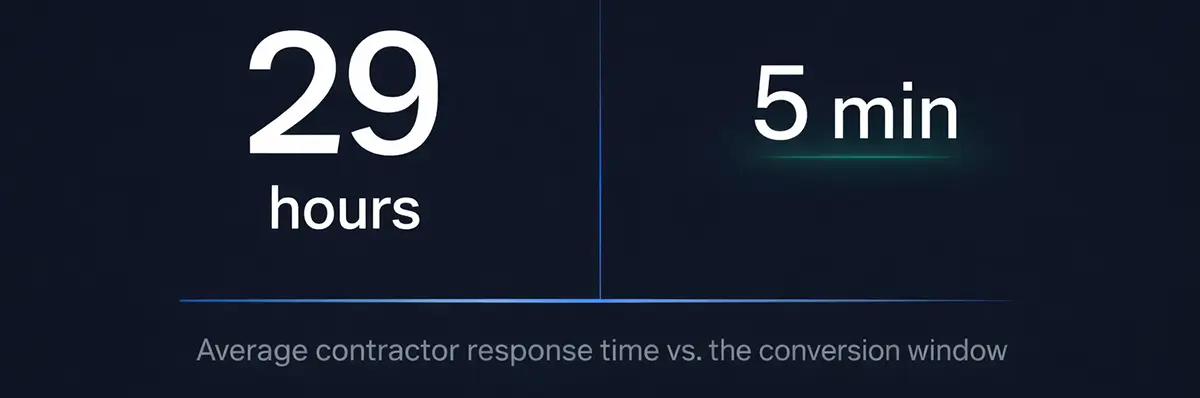
To answer that question, we looked at 507 contractor websites across five primary trades over a 14-and-a-half-month period: HVAC, painting, roofing, electrical, and plumbing. We also examined a meaningful sample of remodeling, kitchen and bath, and outdoor living contractors. We evaluated each site across the same framework: how it performs on search, how it builds trust with a first-time visitor, how clearly it communicates what it does and where it does it, how easy it makes it to contact the business, and whether the site is built to capture leads or simply to exist. One finding set the tone for everything else: the average contractor responds to inbound leads in over 29 hours. The window where a lead is most likely to convert is five minutes.
What we found was not a mystery. The top 10% of contractor websites are not doing anything exotic or technically complex. They are executing a specific set of decisions with consistency and precision. The bottom 90% are not making them.
This piece walks through what those decisions are, why they matter in dollar terms, and how they differ by trade. The buyer who needs an HVAC technician in an August heatwave and the buyer who is planning a kitchen remodel she’s been saving for are not the same person, do not behave the same way online, and do not respond to the same signals. The top contractors understand this. Their websites show it.
The Universal Findings: What Every Top-Performing Contractor Website Gets Right
Before we get into the trade-by-trade breakdowns, there are patterns that appear across every category without exception. These are the baseline requirements for any contractor website that generates leads consistently. The absence of even one of them costs money. Sometimes a great deal of it.
1. The Five-Second Test
The most consistent failure on underperforming contractor websites is this: a visitor cannot answer three questions within five seconds of landing on the page.
Those three questions are: What do you do? Where do you serve? How do I reach you?
Top-performing sites answer all three before the fold, often in the headline alone. A headline like “Phoenix’s Most Trusted HVAC Company Since 1997” answers all three questions in eight words. Most contractor homepages bury the service area, use taglines like “Quality You Can Trust,” and put the phone number in the footer. When a homeowner is searching for help under pressure, the site that answers these questions instantly wins the call. The site that makes them hunt for basic information loses them to the next result on the page.
Homeowners searching for service contractors are not browsing. They are deciding. The AC is out. The pipe is leaking. The roof is damaged. They have their phone in their hand. The entire architecture of a high-performing contractor website is built around this reality.
2. Mobile Is the Primary Experience
of home service searches happen on mobile devices. 53% of mobile users abandon a site that takes longer than three seconds to load. A slow site costs both conversions and search rankings simultaneously.
The top-performing contractor websites treat mobile as the primary experience, not an afterthought. They load in under three seconds, render a click-to-call button prominently, and present a stripped-down, high-contrast layout that is thumb-friendly. A desktop phone number that a mobile user has to highlight, copy, and paste into their dialer is a conversion killer. A click-to-call button that fires with a thumb tap is a conversion tool. The distinction sounds obvious. The gap in implementation across the 507 sites we examined is enormous.
3. Trust Architecture, Not Just Trust Signals
Every marketing guide tells contractors to “add trust signals.” The top 10% go further. They build a layered trust architecture throughout the entire site, not confined to a logo strip in the footer.
What that looks like in practice:
- Licensing and credentials at the top. License numbers, insurance confirmation, and relevant certifications are visible in the header or just below it. This is non-negotiable for plumbers and electricians, the trades with the highest trust threshold, and it is increasingly important across all categories.
- Live review integration, not screenshots. 80% of homeowners check online reviews before making contact, and the average consumer reads 10 reviews before feeling ready to call. Top sites embed live Google review widgets so that reviews auto-update and visitors can click through to verify authenticity. Several of the highest-converting sites display their review count and star rating in the header itself. Static testimonial quotes pasted into a text block signal curation, not credibility.
- Real photography. Team photos, job site photos, trucks, technicians at work. Stock photography is a conversion killer in trades because part of the trust decision is about the humans who will enter the home. The buyer needs to see a face before they unlock the front door.
- Before-and-after project galleries. Present on every high-performing site across all five trades. Essential for painting and remodeling. Increasingly common in HVAC (equipment installations) and roofing (storm damage to completed job). Underutilized in plumbing and electrical, where it remains a differentiator.
- Specific warranty and guarantee language. Not “satisfaction guaranteed.” Specific terms. A stated labor and material warranty eliminates a category of buyer hesitation that vague reassurances cannot.
4. The Speed-to-Lead Problem Is a Website Problem
This is one of the most consequential and underappreciated conversion factors in home services, and it begins at the website level.
The conversion lift for home service leads contacted within five minutes versus leads contacted at the 30-minute mark. 78% of buyers book with the first company that responds.
The problem is well-documented and almost universally ignored. Over 60% of businesses do not respond to inbound leads at all. The average response time across service businesses exceeds 29 hours. Meanwhile, homeowners today submit forms to multiple contractors simultaneously and book with whoever responds first.
Top-performing contractor websites address this at the website level by integrating automated SMS response triggered the moment a form is submitted. The homeowner receives a text within 30 seconds acknowledging the inquiry, confirming that someone will call within minutes, and often including a link to the company’s Google reviews or portfolio so they can continue building confidence while they wait. This workflow is not about being clever with technology. It is about protecting the marketing investment that generated the lead in the first place.
At Ad Genius, we build this lead capture and automated response infrastructure directly into the sites we produce for clients. A website that generates leads but loses them in the response window is not a marketing asset. It is an expensive traffic destination.

5. One Dominant Call to Action
When a visitor lands on a home service website and sees competing CTAs: “Learn More,” “Contact Us,” “Schedule,” “Request a Quote,” and “Download Our Brochure,” they frequently choose none of them. The decision paralysis is documented consumer psychology, and it costs conversions at every scroll depth on the page.
Top-performing contractor websites have one primary CTA and it stays consistent throughout. For emergency-driven trades, that CTA is “Call Now.” For planned-service and renovation trades, it is “Get a Free Estimate” or “Schedule a Consultation.” It does not change. It does not compete. It dominates every page.
6. Dedicated Service Pages for Each Service
“Services” is not a page. It is a section of navigation that leads to pages. The top-performing contractor sites have individual, optimized pages for each core service, and in many cases, for each service in each geographic area they serve.
“Electrical Panel Upgrade in Phoenix” is a service page. “Electrical Services” is not. The former can rank for a specific, high-intent search term. The latter ranks for nothing. Across 507 contractor websites, the correlation between dedicated service pages and search visibility is consistent without exception.
7. Google Business Profile as a Second Homepage
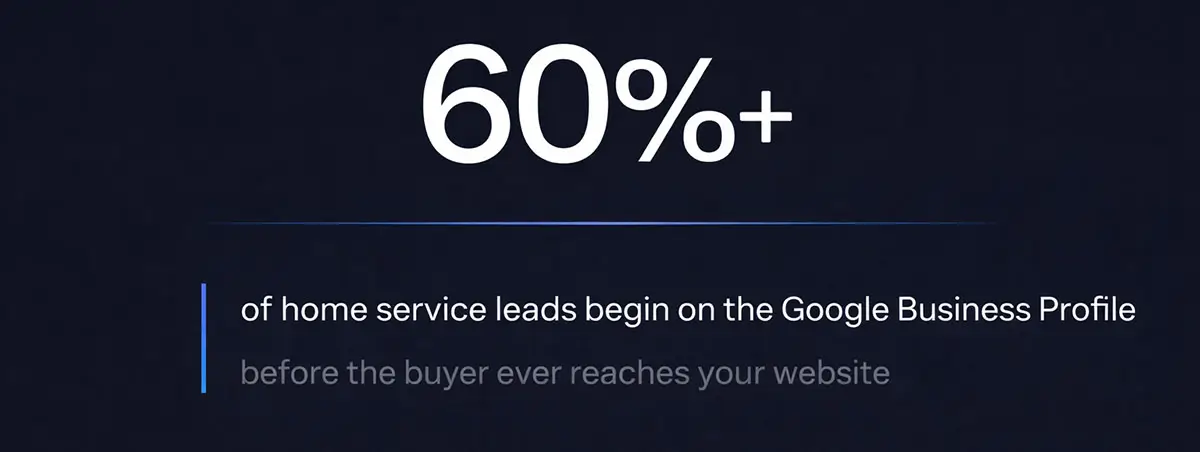
Over 60% of home service leads are tied to the Google Business Profile, which is often the first surface a homeowner sees before they ever reach the website. Top-performing contractors treat GBP optimization as inseparable from website strategy. They maintain consistent name, address, and phone number across both properties, post photos on a regular cadence, and run a systematic process for generating reviews after every completed job.
The contractors in the top 10% are not waiting for happy customers to spontaneously leave reviews. They have a process: a post-job text, a follow-up link, a check-in call. The result is review velocity: a consistent stream of recent, specific reviews that signal active business to both the algorithm and the prospective buyer.
The Structural Divide: Service-Based Trades vs. Planned Renovation
Before the trade-by-trade breakdowns, there is a divide that shapes everything about how contractor websites should be built and how they should communicate. The buyer who needs a plumber right now and the buyer who has been planning a kitchen remodel for six months are not operating in the same decision space. No single website architecture can serve both equally well.
Reactive Urgency: HVAC, Plumbing, Electrical
These trades operate in a compressed decision window. The homeowner did not decide to search today. A problem forced the search. In most cases, the decision to hire is made within hours. The buyer is not comparison-shopping on price or weighing credentials across an afternoon of research. They are looking for the first qualified option that projects competence and availability.
The website’s job in this model is simple and unforgiving: convert the visit into a call as fast as possible. Every friction point costs leads: slow load, buried phone number, unclear service area, a form with eight required fields. The primary CTA is “Call Now” or “Book Same-Day Service.” The hero message is about availability, speed, and trust, in that order.
Emergency service keywords in these categories convert at 6 to 12%, more than double the average across home services. This is because the intent behind the search is not curiosity. It is immediate need. A well-built site capturing this traffic and converting it properly is a revenue engine. A poorly built site lets that traffic leak to competitors.
Deliberate Research: Roofing, Painting, Remodeling
These trades operate in a longer consideration cycle. The homeowner has known about the need for weeks or months. They are comparing options, collecting estimates, checking reviews on multiple platforms, looking at portfolio work, and asking neighbors. The decision involves significant spending, often $10,000 to $80,000 or more, and the buyer is not going to rush it.
The website’s job in this model is to build conviction across multiple touchpoints. Deep project galleries, documented process pages, specific warranty terms, transparent financing, and abundant third-party reviews are not optional enhancements. They are the primary conversion mechanism. A homeowner who is planning a full roof replacement or a kitchen remodel needs to feel completely confident before picking up the phone. The sites that create that confidence win the estimate appointment. The sites that do not lose the prospect to the next tab in their browser.
Trade-by-Trade: What the Top Performers Do Differently
The Buyer Psychology
HVAC purchasing splits cleanly into two distinct decision modes. Emergency demand (the AC fails in August, the furnace dies in December) creates an urgency buyer who has no patience and high intent. Planned demand (system replacement, maintenance agreement, second-opinion consultation) creates a research buyer who is weighing options over days or weeks. The best HVAC websites serve both without confusing them. The rest serve neither particularly well.
What the Top 10% Are Doing
- Emergency and planned services are separated structurally. “Emergency AC Repair: Same Day” occupies the header and hero. System replacement, installation content, and efficiency upgrade information live on separate pages built for the research-phase buyer. Combining them on one page serves neither buyer’s intent and dilutes keyword relevance for both.
- Maintenance agreements are front and center. This is the single most underutilized conversion opportunity on HVAC websites. Maintenance agreements generate recurring revenue, priority service relationships, and warm leads for equipment replacement. Top HVAC sites make the agreement prominent, easy to sign up for, and explained in plain language. The majority of HVAC sites bury it in a dropdown or do not mention it at all.
- Manufacturer and certification logos function as proxy trust. NATE certification, Carrier Factory Authorized Dealer status, Trane Comfort Specialist designation: these logos activate the same confidence transfer as a recognizable brand on any product. Homeowners who cannot evaluate HVAC competence directly use brand affiliations as a shortcut. Top sites display these prominently and explain what they mean for the homeowner’s warranty coverage.
- Seasonal messaging is dynamic. The highest-converting HVAC sites update their headline and primary message based on the season. The site that says “Don’t Lose Cool Air This Summer” in August says something different in October. Most HVAC sites set their homepage copy once and never revisit it.
- Missed calls are systematically captured. Research shows HVAC contractors miss more than a quarter of inbound calls. Top performers use AI voice agents or after-hours answering services integrated directly with their scheduling systems to capture the jobs that competitors lose to voicemail.
The Maintenance Agreement Gap
Every HVAC contractor understands the value of a maintenance agreement intellectually. Very few have built a clear, conversion-optimized path to signing one on their website. This is the largest single revenue opportunity sitting on the table in HVAC digital marketing.
The Buyer Psychology
Painting is the most commoditized trade in residential services. From a buyer’s perspective at the search stage, every painter shows up with brushes and promises quality. The decision cycle involves multiple estimates, and the selection criteria are rarely about price alone. They are about trust, visual proof of craft, and the subtle confidence that strangers can be let into a home without incident.
The buying decision in painting is heavily influenced by two factors that no other trade shares in the same proportion: visual proof of work quality and the homeowner’s comfort level with having a crew in their living space. The top-performing painting sites address both directly.
What the Top 10% Are Doing
- The portfolio is the product. Before-and-after galleries on top painting sites are not an afterthought. They are organized by project type (interior, exterior, cabinet painting, faux finishes, deck staining) rather than dumped into a single photo wall. Interactive before-and-after sliders let visitors drag between the original and finished state, which is dramatically more engaging than two static images side by side.
- Video addresses the stranger-in-my-home anxiety. The fear driving hesitation to hire a painter is not about paint quality. It is about strangers moving through a home. Top painting sites embed a short crew introduction video on the homepage: this is the foreman, this is how we protect your floors, this is what a job day looks like. This addresses the anxiety before it becomes an objection. Nothing else does this as effectively as video.
- Specific warranty terms are stated upfront. A stated two-year labor warranty or a nine-year paint warranty is a conversion signal. It communicates that the company is confident enough in its work to put the commitment in writing. Most painting sites either offer no warranty information or bury it. The contractors stating specific terms prominently are differentiating from competitors who cannot match them.
- Financing is being introduced for larger exterior projects. Exterior painting jobs regularly reach $8,000 to $18,000. The introduction of payment plan options via financing partners is a growing differentiator for top painting sites, reducing the price objection for jobs that buyers want but are hesitant to fund out of pocket.
- Speed-to-lead is automated. Painters are on ladders when leads come in. The homeowner who submitted an estimate request at 2 PM and did not hear back by evening has already booked with a competitor. Top painting businesses have automated SMS acknowledgement triggered at form submission, buying time and signaling professionalism before a human can respond.
The Visual Proof Standard
A sloppy website signals sloppy brushwork. For painting contractors specifically, the quality of web design, photography, and visual presentation directly communicates the quality of the work itself. The correlation is not subtle. It is the first thing a buyer evaluates.
The Buyer Psychology
Roofing divides into two demand categories with different emotional profiles, different timelines, and different information needs. Storm and insurance-driven demand creates an urgency buyer navigating a confusing claims process who is comparing multiple contractors rapidly and often feeling overwhelmed. Retail demand (proactive replacement of an aging roof, visible deterioration, a second opinion) creates a methodical buyer doing genuine online research before committing to a significant investment.
Over 80% of people searching for roofing contractors did not have a specific company in mind when they started. The search itself is the consideration phase. Year-over-year search volume for roofing contractor terms has grown over 100%. The market is expanding and the buyer population is almost entirely undecided at the moment of search. That is the opportunity, and the top-performing roofing sites are built to capture it.
What the Top 10% Are Doing
- Storm damage content is a separate silo. The top roofing sites have a dedicated storm damage response section, not a paragraph on the main services page but a distinct content area with pages on the insurance process, what to document after a storm, how to work with adjusters, and what “damage” looks like at different severity levels. This captures high-intent storm-season search traffic that the standard roofing services page cannot.
- Interactive lead magnets convert the research-phase buyer. Roof cost calculators, storm damage checklists, and “is it time to replace?” diagnostic tools are used as lead capture mechanisms on top roofing sites. A homeowner who completes a storm damage checklist has self-identified as a high-intent prospect. These tools serve the buyer’s research need while generating a qualified lead.
- Drone footage is a visual differentiator. Video marketing has a documented conversion impact on roofing landing pages. Drone footage of a completed job captures the full scope of the project from above: the clean ridge line, the uniform shingle installation, the complete finished surface. It is a differentiator that the bottom 90% of roofing sites do not leverage. It signals scale, professionalism, and a level of craft documentation that competitors with smartphone photos cannot match.
- Manufacturer certification programs are explained, not just displayed. GAF Master Elite, Owens Corning Preferred Contractor, and similar designations are displayed on many roofing sites. Top sites explain what these certifications mean for the homeowner, specifically the enhanced warranty coverage that comes with certified installation. That translation from logo to buyer benefit is what separates the top performers.
- Local social proof is geographically specific. Top roofing sites feature testimonials and project galleries organized by neighborhood or city. “We just completed this job two blocks from you” is significantly more persuasive than a generic five-star review. Geo-specific review content also serves local SEO. Adding the city and neighborhood name to review content strengthens geographic relevance signals.
The Buyer Psychology
What the Top 10% Are Doing
- Licensing and insurance are more prominent here than in any other trade. License numbers, insurance certificates, and bonding information are displayed prominently, often in the header. The implicit message is: we are licensed professionals operating within code, and you are protected if anything goes wrong. This is the primary trust mechanism in electrical, and it is handled with more discipline by top performers than in any other category we examined.
- Permit and code compliance are stated explicitly. Homeowners who have experienced unpermitted electrical work, or who understand the insurance and resale implications of code violations, are looking for explicit assurance. “All work fully permitted and code-compliant” on a service page addresses a real concern that most electrical sites ignore.
- Demand is segmented into three distinct buyer types. Emergency electrical (panel failure, outage, sparking outlet) is a different buyer from project-based electrical (panel upgrade, EV charger installation, whole-home rewire) which is a different buyer from inspection and certification work. Top electrical sites build separate pages for each demand type, targeting the specific intent behind each search.
- EV charger installation is a growing high-ticket opportunity. As EV adoption accelerates, homeowners searching for Level 2 charger installation are high-intent, high-ticket buyers with a specific need and often a specific vehicle in mind. Top electrical sites have dedicated EV charger installation pages ranking for this term. The majority of electrical contractors have no mention of EV charging anywhere on their site. This leaves a growing demand category entirely uncaptured.
- Industry affiliation and award recognition justify premium pricing. In a trade where the buyer cannot evaluate technical quality directly, credentials, affiliations, and third-party recognitions function as price-justification signals. Top electrical sites display these prominently and use them to support pricing conversations that less credentialed competitors cannot have.
The Buyer Psychology
Plumbing has the shortest decision window of any residential trade. A burst pipe, an overflowing fixture, or no hot water is not something a homeowner deliberates about. The decision to hire is made in minutes. In that window, the buyer is not comparing prices across four tabs. They are booking the first qualified option that answers.
This creates a conversion dynamic unlike any other trade. Plumbing websites do not need to build prolonged conviction or demonstrate layered expertise across a deep portfolio. They need to project availability, competence, and trustworthiness fast enough to win the call before the homeowner’s finger moves to the next search result.
What the Top 10% Are Doing
- Availability and response speed are the dominant message. Before service descriptions. Before awards. Before reviews. The number is large, the response time commitment is explicit, and “Same-Day Service” or “Available Now” is front and center. The top plumbing sites lead with this because it directly answers the emergency buyer’s primary question: “Can I get someone here today?”
- Upfront pricing eliminates the cost anxiety. Homeowners in an emergency situation are anxious about being overcharged for urgency. The sites addressing this proactively with messaging like “flat-rate pricing, you know the cost before we start” reduce the hesitation to call in a high-anxiety purchase situation. Plumbing is a trade where pricing transparency is a conversion mechanism, not just a disclosure.
- Membership and service programs are presented alongside emergency services. Annual drain maintenance, water heater check-ups, backflow testing. Recurring service agreements are a substantial revenue opportunity that most plumbing sites never mention. Top plumbing businesses present these programs on the same page as emergency services, converting a one-time urgent caller into a recurring relationship.
- Reviews are treated as the primary trust signal. In a trade where the homeowner is inviting a stranger into their home during a stressful situation, reviews carry extraordinary weight. Plumbing companies with 200+ recent reviews, displayed prominently and linked directly to the Google profile for verification, consistently outperform competitors with superior qualifications but fewer visible endorsements.
- Response infrastructure is non-negotiable at this level. More than two-thirds of home service leads come outside traditional business hours. The best plumbing websites integrate 24/7 call answering, whether staffed or AI-assisted. The homeowner with a burst pipe at 9 PM is not leaving a voicemail and waiting until morning. They are going to the next result.
Remodeling, Kitchen, Bath, Pool, and Outdoor: The High-Ticket, Long-Cycle Segment
The Remodeling Market Context
Average bathroom remodels run $10,000 to $25,000. Luxury renovations frequently exceed $50,000. Kitchen remodels are comparable. Outdoor living and pool construction projects can reach six figures. These are not purchases that happen on impulse, and the buyer who is comparing remodeling contractors is doing serious research.
At this price point and with this level of buyer involvement, the remodeling contractor’s website needs to function as a digital showroom, a credentials file, and a trust-builder simultaneously. The contractors whose websites do all three win a disproportionate share of the high-value projects in their market.
What Top Remodeling Websites Do Differently
- Professional photography is non-negotiable. Smartphone photos communicate that the business does not invest in its presentation. Buyers read that as a signal about how the contractor will treat the project itself. The visual quality of portfolio photography directly correlates with the perceived quality of the work, even before a buyer has made contact. Top remodeling sites commission professional photography for every significant project.
- The project process is documented transparently. Remodeling generates enormous homeowner anxiety. Their home will be disrupted for weeks. Strangers will be working inside it. They are committing to a relationship that extends across a timeline. Top remodeling sites address this anxiety by walking through the process step by step: consultation, design, permits, demolition, construction, final walkthrough, and sign-off. This is not just informational content. It is trust-building architecture.
- Niche specialization beats general contractor positioning. “We do everything” is the marketing position of a contractor who wins nothing consistently. The top remodeling sites specialize their messaging around specific high-ticket project types (modern kitchen remodels, spa-style master bath renovations, outdoor living additions) and build keyword-targeted content around each. A homeowner searching for “spa bathroom remodel Phoenix” does not want a general contractor. They want the specialist.
- Financing is integrated into the conversion path. For a $40,000 kitchen remodel, the availability of a payment plan changes the population of buyers who will call. Top remodeling sites integrate financing application tools directly into the estimate request flow and feature financing prominently in their call-to-action messaging. This expands the viable buyer pool for high-ticket projects.
- Video testimonials are the standard for social proof. Text reviews build confidence. Video testimonials build emotional conviction. For a $30,000 remodel, a 90-second video of a homeowner walking through their renovated kitchen and describing the experience is more persuasive than 40 five-star text reviews. Top remodeling sites embed client testimonial videos on their homepage and on relevant service pages.
Pool, Outdoor Living, and Yard Construction
These project categories follow the same high-consideration, long-cycle pattern as kitchen and bath, with one important addition: the buyer is purchasing an aspiration, not just a functional improvement. They are buying the idea of summer evenings on the patio, the pool that changes how the family uses the backyard, the outdoor kitchen that becomes the center of entertaining.
The website’s job is to sell the vision before selling the service. Top outdoor living and pool construction sites lead with lifestyle imagery that helps buyers picture the end state. Portfolio content is organized by project type and scale so buyers can find inspiration relevant to their own space and budget. Instagram and Pinterest generate meaningful referral traffic to these businesses, which means the visual quality of the website needs to match the quality of the social content.
Seasonal demand windows are compressed. In Phoenix and similar markets, the decision window for new pool construction narrows to fall and early winter for builds that will be ready by Memorial Day. Top outdoor living sites run targeted content and offer early-booking incentives during these windows, capturing buyers who might otherwise delay.
The Seven Failure Modes of the Bottom 90%
These are the structural problems that appear across underperforming contractor websites without exception. They are not obscure technical issues. They are foundational decisions, and the absence of them creates predictable, measurable revenue leakage.
“Quality Work at Affordable Prices.” “Your Trusted Local Contractor.” “Serving the Greater Phoenix Area Since 2008.” These headlines communicate nothing a buyer can act on. They do not differentiate, they do not specify a service, and they do not tell the visitor what to do next. The top 10% lead with specificity: service, geography, and a credible differentiator that competitors cannot claim.
One generic services page that says “we serve the greater metro area” ranks for nothing and converts the geographic search intent that drives the majority of contractor leads. Dedicated pages for each core service in each primary city or neighborhood serve the local SEO function that a single page cannot. “Emergency Plumbing Repair in Scottsdale” is a page that ranks and converts. “We serve Scottsdale” is a sentence that does neither.
Pasting three five-star quotes into a testimonials section is not social proof. It is the appearance of social proof, which experienced buyers recognize and discount. Live review widgets pulling from Google in real time are trusted because they cannot be curated. The contractor with 340 live Google reviews displayed on their homepage is telling a verifiable story. The contractor with four cherry-picked testimonials is not.
A three-second abandonment threshold means that a site loading in five seconds has already lost a significant portion of its traffic before anyone sees the service offering. Speed problems trace to oversized images, bloated page builders, and underperforming hosting infrastructure. Beyond the conversion cost, a slow site ranks worse. Google uses Core Web Vitals as a ranking signal, meaning the speed problem costs both visibility and conversions simultaneously. Most contractor sites fail this test and have no measurement system in place to know it.
This is the failure that funds all the other failures. Without proper conversion tracking (which call came from organic search, which from Google Ads, which from a specific landing page, which from a service area page added four months ago) there is no way to know what is working or where the marketing budget is generating ROI. Top contractors have attribution infrastructure in place: call tracking, form submission tracking, Google Analytics events configured to meaningful actions, and a dashboard that connects ad spend to booked jobs. The bottom 90% are making budget decisions based on intuition.
Search engines increasingly reward depth, specificity, and demonstrated expertise. A homepage with 200 words of generic service description, a blog with three posts from 2021, and service pages that consist of a headline and a contact form do not build authority. They signal a dormant business. The contractors in the top 10% publish with regularity, write to real buyer questions at specific stages of the decision cycle, and build content that reflects genuine expertise in their trade. Not marketing copy that reads like it was assembled without any understanding of how the buyer actually makes decisions.
Claiming a Google Business Profile and never touching it again is the equivalent of printing a yellow pages ad and assuming the leads will flow indefinitely. GBP is a living platform that rewards consistent activity: new photos, regular posts, prompt responses to reviews, accurate service listings, and FAQ content that matches what buyers are actually searching for. The contractors who treat it as an ongoing marketing channel rank higher, generate more profile actions, and capture local intent that their inactive competitors miss entirely.
What the Data Actually Shows
Rather than citing numbers without grounding them in operational reality, here is what the benchmarks mean in terms that a contractor with crews to feed can act on.
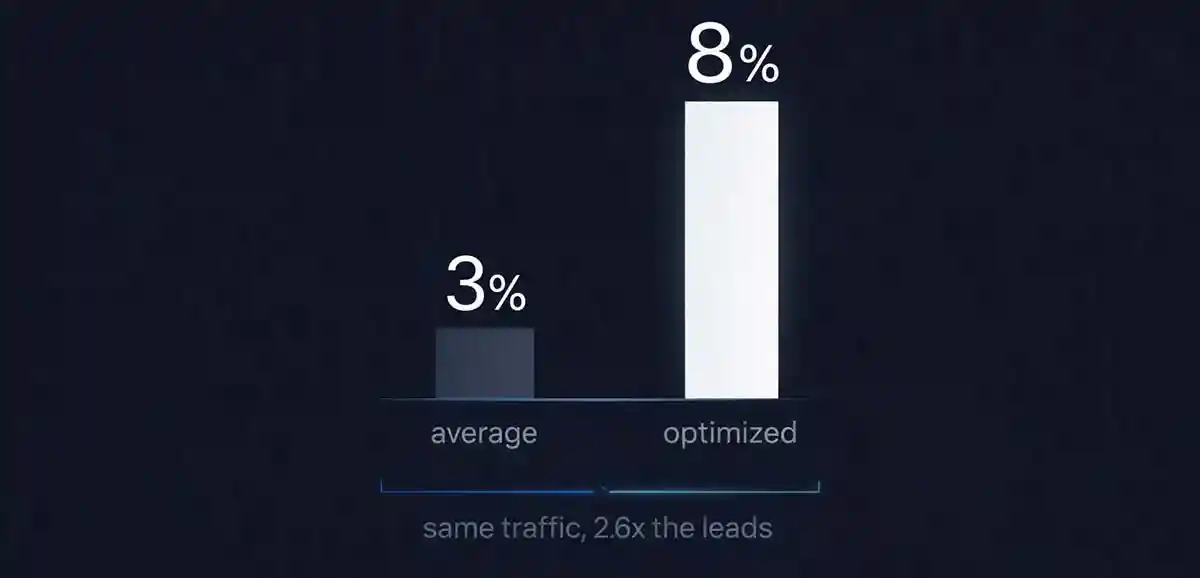
The conversion rate gap between an average contractor website and an optimized one. At 1,500 monthly organic visitors, that difference is 45 leads per month vs. 120: a 75-lead gap from the same traffic volume, before spending a dollar on additional advertising.
The lead-to-booking conversion lift for home service businesses that respond within five minutes versus those who respond at the 30-minute mark. Most contractors are responding in 29+ hours.
The percentage of home service leads tied to the Google Business Profile. A single GBP suspension is not an inconvenience. It is a revenue event.

Of home service buyers book with the first company that responds to their inquiry. First mover advantage is not a concept in home services. It is the dominant conversion mechanism.
These numbers are not theoretical. They represent the operational gap between contractors in the same market, serving the same buyer, competing on the same keywords. The difference between them is not budget. It is structure, measurement, and the discipline to execute consistently on the decisions that actually convert.
What This Means for Your Business
Across 507 contractor websites and five primary trades evaluated over 14 and a half months, the pattern is consistent. The top 10% are not winning because of superior creative, exotic technology, or unlimited marketing budgets. They are winning because they made a specific set of structural decisions and maintained the discipline to execute them with precision.
They answer the buyer’s questions before the buyer has to ask them. They build trust architectures, not trust signals. They respond to leads before competitors know the lead exists. They measure what matters and allocate accordingly. And they understand that different buyers in different purchase modes require fundamentally different conversion strategies.
The bottom 90% are not failing because they offer inferior service. They are failing because they never built the infrastructure that converts their reputation and their expertise into inbound demand.
The gap between the top 10% and everyone else is not talent. It is the willingness to build the systems that translate good work into consistent lead flow.
About This Analysis
This analysis covers 507 home service contractor websites evaluated between January 6, 2025 and mid-March 2026, a period of approximately 14 and a half months. The sites in this analysis were not assembled from a constructed sample. They were encountered through the course of operating a working agency: contractors found through organic search results across the five primary trade categories, and businesses that submitted their sites for evaluation in response to Ad Genius advertising. That origin matters. Every site in this analysis represents a real business actively operating in a real market, not a curated set selected to support a predetermined conclusion. The findings reflect what we actually saw.
Each site was assessed against a consistent eight-dimension framework:
- Conversion rate optimization: CTA structure, form friction, and the presence of a single dominant conversion path
- Traffic and search visibility: ranking presence for primary trade and service-area keywords in each site’s stated market
- Clarity: whether the site communicates what the business does, where it operates, and why a buyer should call within the first five seconds of a visit
- Mobile experience: load speed, click-to-call accessibility, and layout rendering on small screens
- Trust architecture: licensing and credential display, review integration, warranty language, and social proof placement
- Lead capture infrastructure: automated response capability, form design, and CTA consistency across the site
- Google Business Profile alignment: NAP consistency and GBP optimization relative to the website
- Content depth and specificity: dedicated service pages, geographic targeting, and content recency
Sites were categorized into performance tiers based on the presence, absence, and quality of execution across these dimensions. The findings in this report reflect patterns that held consistently across trade categories, market sizes, and geographic regions.
cite this research
Journalists, researchers, and industry writers are welcome to cite findings from this analysis. Please use the following attribution:
Williamson, Brett. “We Analyzed 507 Home Service Contractor Websites. Here’s What Separates the Top 10% from Everyone Else.” Ad Genius, 2026. adgenius.com/research/contractor-website-analysis
When referencing specific statistics from this report, please link to the source URL above. For interview requests or additional data inquiries, visit adgenius.com/contact.
Brett Williamson is the Founder & CEO of Ad Genius, a Phoenix-based digital marketing agency specializing in home service and professional service contractors. Ad Genius helps established contractors build the digital infrastructure needed to generate consistent, qualified inbound leads and stop competing on price because buyers can’t find them any other way. adgenius.com