Jump to…
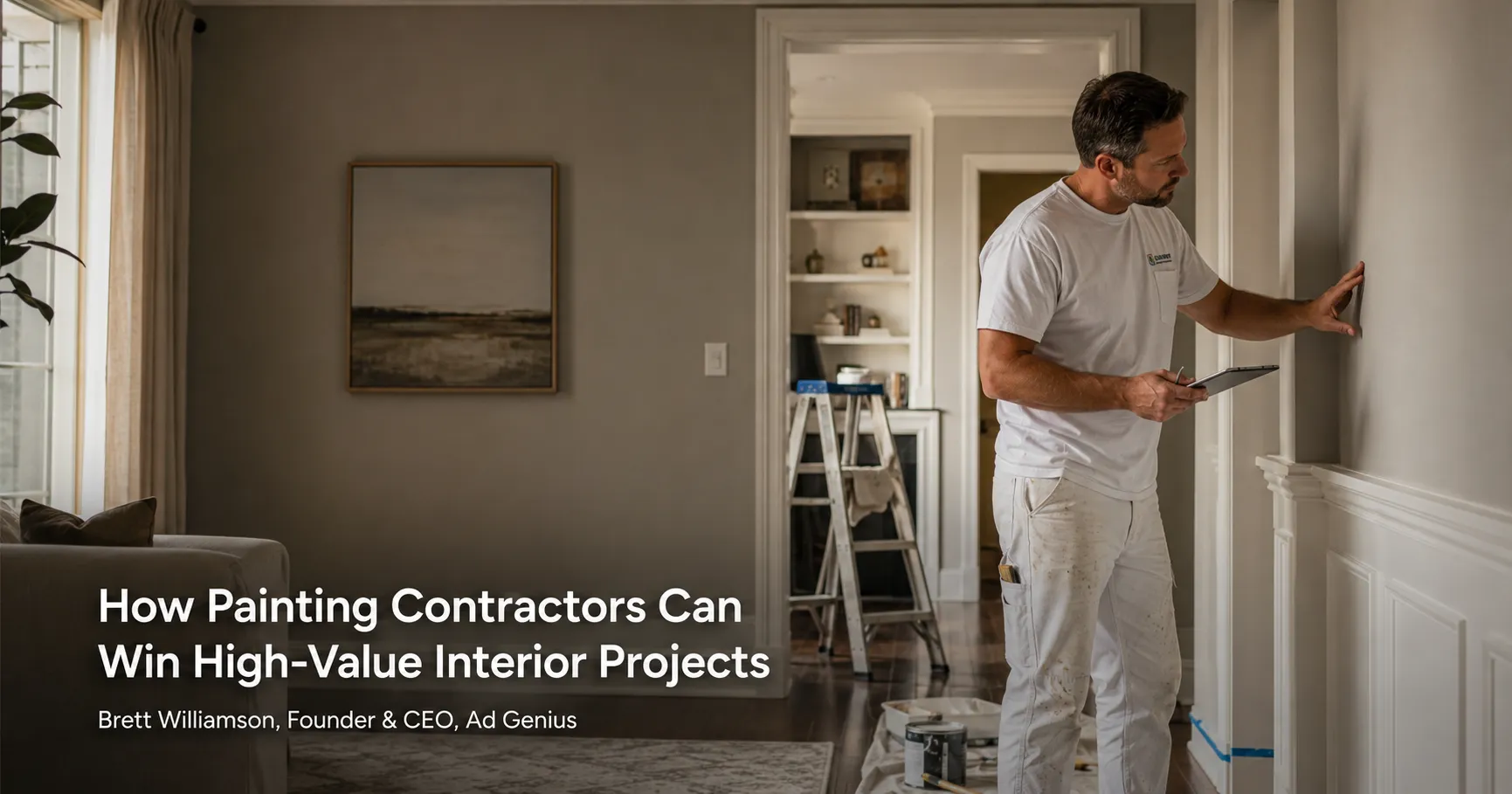
Painting contractors win high-value interior projects by positioning their company around craftsmanship, project management, and risk reduction instead of low price. Successful contractors show relevant project proof, qualify homeowners before estimating, provide detailed proposals, follow up consistently, and deliver an organized experience that generates reviews and referrals.
This guide breaks down how painting contractors identify, attract, qualify, and close larger interior projects, and how the experience after the sale creates the next referral.
What Makes an Interior Painting Project High-Value
A high-value interior painting project combines a larger financial opportunity with enough scope, complexity, or long-term potential to justify additional planning and expertise. It may involve an entire home, detailed surface preparation, specialty coatings, cabinets, trim, architectural features, or coordination with designers and other contractors.
Value is not just a bigger number on the estimate. The sections below cover what actually separates a high-value interior painting project from a project that is simply large.
Project Size Is Only One Factor
A large square-footage project is not automatically a good project. Before treating a big job as desirable, a contractor should weigh the expected revenue against the time it occupies on the schedule, the labor and crew capacity it will require, and the material costs involved, including any specialty coatings or extended cure times.
Preparation needs matter just as much, especially on older surfaces or homes with previous coating failures, as does the scheduling complexity created by occupied rooms and coordination with other trades. The real test is gross profit potential once you account for labor and materials, weighed against the risk of callbacks or scope changes once work begins.
Examples of High-Value Interior Painting Projects
Interior projects that justify a premium approach include whole-house interior repainting, homes with high ceilings and open-concept living areas, and cabinet refinishing. Detailed trim, doors, and millwork also fall into this category, along with historic-home interiors and designer-led color and finish plans.
Decorative or specialty finishes, occupied luxury homes, and interior painting completed alongside a larger remodel round out the list. Each of these carries more planning, more risk, and more opportunity than a standard repaint.
High Revenue Does Not Always Mean High Profit
A large project can still be a poor project if you don’t weigh labor, preparation, disruption, and material requirements against the price. Before accepting a large interior job, a contractor should evaluate it the same way they would evaluate any other high-value opportunity.
| Large Interior Job | High-Value Interior Project |
| Priced mainly on square footage | Priced on scope, preparation, and finish level |
| Sold on speed and low price | Sold on process, protection, and outcome |
| Minimal preparation included | Preparation and repairs clearly scoped |
| One general estimate line | Itemized scope by room and surface |
| Crew capacity assumed to be available | Crew capacity confirmed before selling the work |
Why Do Homeowners Choose One Painting Contractor Over Another

Homeowners hiring for a major interior project are not only comparing paint prices. They are evaluating which contractor is most likely to protect the home, manage the crew, communicate clearly, stay on schedule, and deliver a consistent finish without creating unnecessary disruption.
Every homeowner evaluating a large interior project is trying to avoid a specific set of risks: damage to flooring, furniture, or fixtures; inconsistent finishes between rooms; unreliable crews or unexplained absences; unexpected change orders once work has started; poor surface preparation that shows up later; delays that disrupt the household longer than expected; weak or inconsistent communication during the project; and problems that go unresolved after final payment.
Premium buyers are purchasing certainty and accountability alongside the painting work itself. A contractor who can demonstrate that certainty in the estimate has already answered the question most competitors leave unaddressed.
Which Interior Painting Services Attract Higher-Value Projects
Not every painting service carries the same margin or the same buyer expectations. The services below tend to attract homeowners who are planning a larger investment rather than a single-room refresh.
Whole-Home Interior Painting
Complete-home projects increase total scope while giving a contractor the chance to create consistency across walls, ceilings, trim, and doors in a single coordinated project rather than a series of disconnected jobs.
Cabinet Painting and Refinishing
Cabinet projects require specialized preparation, application methods, curing procedures, and quality control that most homeowners cannot easily compare between contractors, which rewards a company that can explain its process clearly.
Trim, Doors, and Architectural Millwork
Crown molding, built-ins, wainscoting, staircases, and detailed doors are labor-intensive and highly visible. Buyers evaluating this work want precision, not speed.
Specialty and Decorative Finishes
Limewash, Venetian plaster, color drenching, murals, textured finishes, painted floors, accent ceilings, and wallpaper installation or removal continue to see strong interest in residential design coverage. These services help a contractor stand out from companies that only offer basic wall repaints.
Interior Painting for Remodels and Renovations
Working alongside remodelers, custom builders, designers, and homeowners completing a broader renovation plan connects a painting company to naturally larger, better-coordinated projects.
How Should a Painting Contractor Position the Business for Premium Work

Positioning determines who calls first. A contractor cannot attract high-value projects with the same messaging used to attract a single-room repaint.
Define the Projects the Company Wants
Clarity starts internally. A contractor should define an ideal project size, preferred property types, target neighborhoods, specialty services, and a minimum project value, along with a realistic view of current crew and scheduling capacity and the types of projects the company should decline.
Replace General Claims With Specific Proof
Generic statements do not differentiate a contractor from the next search result. Claims like quality work, professional service, free estimates, and competitive prices are used by nearly every competitor and carry no persuasive weight on their own.
Specific proof carries the weight instead: a documented surface-preparation process, clear crew-supervision standards, daily project communication, and a written workmanship warranty.
Protection procedures for floors, furniture, and fixtures; relevant certifications; named paint systems and finish levels; detailed project timelines; and a final quality-control walkthrough all reinforce the same message. Each one answers a question a premium buyer is already asking silently.
Make the Website Look Capable of Handling the Desired Work
The website should show the type of work the contractor wants to sell, not only a general list of painting services. Dedicated pages for interior house painting, whole-home repainting, cabinet painting, trim and millwork, luxury or high-end interior painting, historic-home painting, and interior painting in priority service areas help homeowners self-select into the right conversation. This is also where how top painting contractors price their work becomes relevant, since pricing transparency and project positioning reinforce each other.
What Marketing Assets Help Contractors Win Larger Interior Jobs
Positioning attracts attention. These assets are what convert that attention into a scheduled estimate for a higher-value project.
Detailed Interior Project Pages
Each project page should document the initial condition, the homeowner’s goals, the surfaces included, the preparation required, the products and finishes selected, any challenges encountered, the project timeline, and the completed result.
Before-and-After Photography
Real, well-lit project photography outperforms stock imagery every time a homeowner is evaluating whether a contractor can handle a comparable project. Useful shots include wide room views, close-ups of trim and finishes, preparation work, floor and furniture protection, crew members working, and final walkthrough details.
Reviews That Describe the Project Experience
Not all reviews carry equal persuasive weight for a premium buyer. Reviews that mention large or whole-home projects, cleanliness, communication, care around belongings, reliability, detailed preparation, crew professionalism, schedule management, and final finish quality do far more to move a decision than a star rating alone.
Short Videos That Reduce Customer Uncertainty
Video content works well for the specific uncertainties premium buyers have. Useful topics include how the crew protects an occupied home, what happens during an interior estimate, how cabinets are prepared and refinished, how daily cleanup works, and what homeowners should expect during a whole-house repaint.
How Can Local SEO Attract Better Interior Painting Leads
Search visibility only helps if it attracts the right buyer. This approach aligns with our broader SEO strategy for painting contractors and is built to attract homeowners planning larger interior projects rather than the lowest-intent searches in the category.
Target Services and Locations Together
Content built around combined service and location terms performs better than a single generic services page. Examples include interior painting contractor in a specific city, whole-house interior painting in that city, cabinet painting in that city, luxury interior painters in that city, and historic-home interior painting in that city.
Thin pages that swap a city name with no other changes do not perform. Each page needs locally relevant projects, property types, neighborhoods, challenges, and customer questions to earn ranking and trust.
Optimize the Google Business Profile for Interior Work
A well-maintained profile should use the most accurate primary and secondary categories, add completed interior projects regularly, and rely on original project photos rather than stock images. Publishing service-focused updates, answering common customer questions directly on the profile, requesting reviews after relevant interior projects specifically, and linking the profile to the most relevant service page round out a strong setup.
Build Local Authority Through Partnerships
Interior designers, remodeling contractors, custom home builders, flooring companies, cabinet companies, real estate agents, property managers, and paint and decorating stores are natural referral partners. The strongest partnerships are built by making the partner look reliable to their own customer, not by asking for referrals without giving anything back.
How Should Painting Contractors Qualify High-Value Leads
Qualification protects estimating time and helps a contractor identify which inquiries deserve a full site visit and a detailed proposal. It also connects directly to structuring lead generation for painting contractors, since lead quality determines how much qualification work is needed downstream.
Questions to Ask Before Scheduling an Estimate
Useful questions include which rooms and surfaces are included, whether ceilings, doors, trim, cabinets, or built-ins are involved, and whether the home will be occupied during the project.
It also helps to ask whether repairs or other renovations are underway at the same time, whether a designer or contractor has already created specifications, and when the project needs to begin. Rounding out the picture means confirming who approves the work, what matters most to the homeowner in the final result, whether the homeowner has hired a professional painting company before, and whether they are comparing approaches or only collecting prices.
Identify Fit Without Asking Only About Budget
An early budget question can be useful, but project fit depends on more than a dollar figure. Scope, expectations, timeline, the decision-making process, and the homeowner’s willingness to invest in proper preparation all determine whether a project is a good fit.
Know When to Decline an Opportunity
Some warning signs are worth taking seriously before committing to an estimate: unrealistic timelines that don’t allow for proper preparation, a refusal to discuss the full scope of the project, or expectations that conflict with the proposed preparation process. Repeated pressure to remove essential preparation steps, no clear decision maker among multiple stakeholders, a conversation focused only on reaching the lowest possible number, and unresolved disputes described from a previous contractor relationship are all reasons to walk away.
How Can the Estimate Become a Better Sales Conversation
The estimate is where positioning either gets confirmed or gets undone. A structured conversation converts better than a walkthrough followed by a generic number.
Begin With the Homeowner’s Priorities
Before discussing scope, ask what the homeowner wants to improve and what concerns them about the project. Common priorities include updating the home’s appearance, creating consistency between rooms, preparing for a move, completing a remodel, protecting expensive finishes and furnishings, correcting work from a previous painter, and minimizing disruption to the household.
Walk Through the Scope in a Consistent Order
A repeatable sequence keeps the estimate thorough and easy for the homeowner to follow.
- Confirm all rooms and surfaces included
- Identify repairs and preparation needed
- Discuss access and furniture movement
- Review coatings and finish levels
- Confirm color selection responsibilities
- Discuss crew size and schedule
- Explain protection and cleanup procedures
- Review communication expectations during the project
- Confirm the decision process and the next step
Explain Problems Without Creating Fear
The estimator should calmly explain surface damage, adhesion concerns, stains, drywall issues, previous coating failures, and other conditions that affect the work. The goal is to help the homeowner understand the scope, not to pressure them into buying.
What Should a High-Value Interior Painting Proposal Include
A strong interior painting proposal defines the surfaces, preparation, products, number of coats, protection methods, exclusions, schedule, payment terms, change-order process, and warranty. The homeowner should be able to understand exactly what is included and compare more than just the final price.
Break the Scope Into Clear Sections
A proposal reads best when it separates walls, ceilings, trim, doors, and cabinets from repairs, specialty finishes, furniture movement, protection, and cleanup. Breaking the scope apart this way makes it easy for a homeowner to see exactly what is included in each part of the project rather than trying to interpret a single lump-sum number.
Provide Options Without Making the Proposal Confusing
Contractors can present options based on additional rooms, upgraded coatings, cabinets or built-ins, trim and doors, color consultation, repair levels, or phased versus complete-home scheduling. Never remove necessary preparation simply to create a cheaper option.
Price for the Work Required
Estimating should account for labor, materials, preparation, productivity, overhead, and profit, not a simple square-foot price or trying to underbid every competitor. A proposal built on a real cost structure holds up better under homeowner scrutiny than one built to win on price alone.
How Should Painting Contractors Follow Up After an Estimate
Homeowners considering a major interior project often need time to review details, coordinate schedules, or speak with another decision-maker. Follow-up is where many otherwise-winnable projects are lost by default.
Use a Simple Follow-Up Schedule
A simple, consistent cadence works better than sporadic check-ins. Within 24 hours, confirm receipt of the proposal and answer any immediate questions. Three days later, ask whether any part of the scope needs clarification. Seven days later, address timing, options, or unresolved concerns. A final follow-up should ask whether the project has moved forward or whether the timeline has changed.
Follow Up With Information
Useful follow-up materials include a similar completed project, a preparation video, product information, warranty details, scheduling options, and direct answers to concerns raised during the estimate. Information moves a considered decision forward. Repeated pressure does not.
Track Why Projects Are Won or Lost
Recording why a project was won or lost, whether it came down to price, timing, no decision at all, a competitor being selected, a scope change, an unqualified lead, a trust or communication concern, or follow-up that stopped too early, reveals whether the underlying problem is lead quality, estimating, positioning, pricing, or sales execution, rather than leaving the contractor to guess.
How Does the Project Experience Create Future High-Value Work
Winning the project is not the end of the marketing process. The project experience determines whether it produces a review, a referral, and a repeat customer.
Communicate Before the Crew Arrives
A short message confirming arrival time, which crew members will be on site, the areas being worked on each day, furniture responsibilities, color selections, access instructions, and the expected daily schedule removes most of the uncertainty a homeowner feels on the first morning of a project.
Provide Consistent Updates
For longer projects, a short daily update covering work completed, work planned for the next day, decisions needed, schedule changes, and any issues discovered keeps the homeowner informed and reduces anxious check-in calls.
Finish With a Formal Walkthrough
A strong close includes a quality-control inspection followed by a customer walkthrough, documented touch-ups, and clear care and curing instructions. Explaining the warranty, collecting final payment, requesting a review, and asking permission to photograph the completed project all belong in this same conversation.
Ask for the Next Introduction
After a successful project, ask directly whether the homeowner knows a neighbor, designer, builder, or family member planning similar work. High-value projects tend to travel through the same social and professional circles.
What Can a Painting Contractor Do in the Next 90 Days
Winning larger interior projects is a sequence, not a single campaign. The plan below moves from definition to visibility to sales process over three phases.
Days 1 to 30: Define the Offer
The first month is about clarity, not action. Set the preferred project profile, establish a minimum project size, and select two or three priority interior services to lead with. Update the sales language around protection, process, and project management, and identify the best completed projects to feature in marketing going forward.
Days 31 to 60: Improve Visibility and Proof
The second month builds the proof and visibility the positioning depends on. Update the interior painting service page, publish two detailed project pages, and improve the Google Business Profile. Request project-specific reviews, create a lead-qualification form, and begin reaching out to potential referral partners.
Days 61 to 90: Improve the Sales Process
The final month tightens the process that turns visibility into booked work. Standardize the estimate questions, improve proposal detail, and build follow-up templates. Track won and lost opportunities, review average project value and closing rate, and adjust marketing based on the projects producing the best margin.
How This Fits Within Broader Painting Contractor Marketing
Winning high-value interior projects is one part of a larger marketing system. Explore our broader approach to digital marketing for painting contractors to see how visibility, demand quality, and conversion work together across residential and commercial painting work.
Final Thoughts on Winning High-Value Interior Painting Projects
You don’t win high-value interior projects with a lower number. They are won by a contractor who has already answered the questions a homeowner is afraid to ask out loud: Will my home be protected? Will the crew show up when they say they will? Will the finish look as good in the hallway as it does in the sample?
Positioning, proof, qualification, and follow-up are not separate tactics. They are one system, and each part covers for the weaknesses in the others. A contractor who builds all four consistently spends less time chasing price shoppers and more time on projects worth the crew’s time.
Frequently Asked Questions About Winning High-Value Interior Painting Projects
How Can Painting Contractors Get High-End Clients?
Painting contractors attract higher-end clients by showing relevant premium work, targeting the right services and locations, building relationships with designers and remodelers, collecting detailed reviews, and presenting a professional process that reduces the customer’s perceived risk.
What Makes an Interior Painting Project High-Value?
A high-value interior project offers strong profit potential and may involve multiple rooms, detailed preparation, specialty finishes, cabinets, millwork, high ceilings, occupied-home protection, or coordination with a broader renovation.
Should Painters Publish Their Interior Painting Prices?
Publishing starting prices, typical ranges, or the factors that influence cost can help prequalify customers. Contractors should avoid presenting a single universal price that ignores preparation, repairs, surface types, access, and finish requirements.
How Can a Painting Contractor Stand Out From Competitors?
A contractor can stand out through specialized project proof, detailed estimates, fast communication, documented preparation, organized crews, strong warranties, clean job sites, and a consistent customer experience from first contact through final walkthrough.
Which Services Can Increase an Interior Painting Project’s Value?
Cabinet painting, detailed trim, doors, ceilings, drywall repair, wallpaper services, decorative finishes, color consultation, and complete-home painting can expand a project’s scope when they match what the homeowner actually needs.
Do Reviews Help Painting Contractors Win Larger Jobs?
Yes. Reviews reduce uncertainty when they describe projects similar to the one a prospective customer is planning. Reviews mentioning communication, cleanliness, scheduling, preparation, and finish quality are more persuasive to a premium buyer than a star rating alone.
Is Your Painting Company Positioned to Win Better Interior Projects
At Ad Genius, we work with established painting contractors who want fewer, better projects. The right starting point is a conversation about a company’s local market position, lead quality, and sales process, not a generic marketing proposal.
If you are an established painting contractor and the patterns described here match your business, the right next step is a conversation about your specific market position, not a proposal.