Jump to…
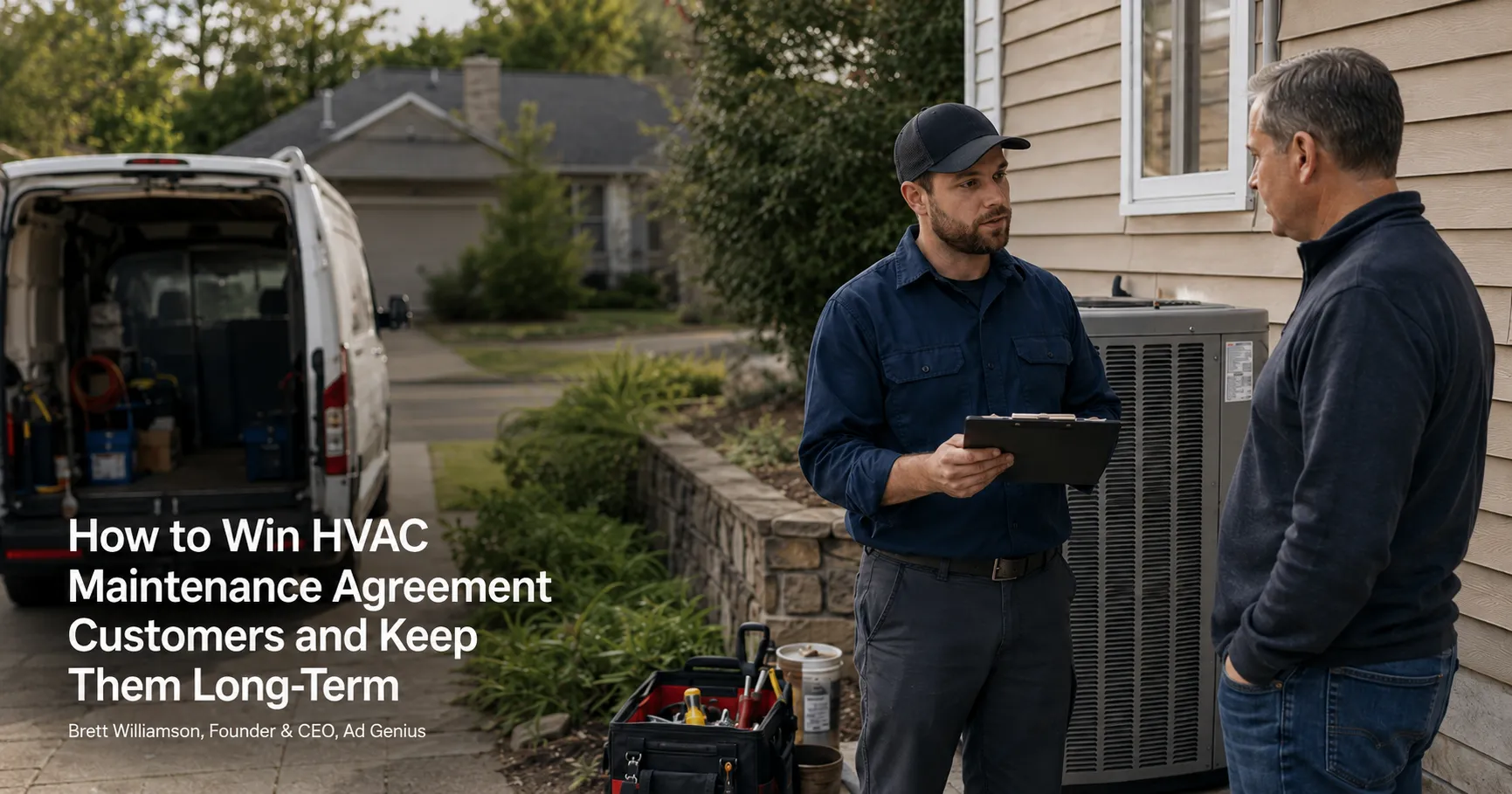
HVAC companies win maintenance agreement customers by offering clear benefits, presenting the plan during relevant service interactions, and making enrollment simple. They retain those customers by completing promised maintenance, communicating throughout the year, documenting the value provided, and making renewal easy. HVAC maintenance agreements only generate lasting revenue when enrollment and retention are treated as equally important.
Signing up a customer is only the beginning. A maintenance agreement program creates real value when customers understand what they are paying for and keep renewing year after year. This guide covers the full customer lifecycle, from building an agreement worth buying to keeping members long after the first sale.
What Is an HVAC Maintenance Agreement?
An HVAC maintenance agreement is a recurring service plan between an HVAC company and a customer. The company provides scheduled inspections, tune-ups, or preventive maintenance in exchange for a monthly or annual fee. Some agreements also include priority scheduling, repair discounts, reduced diagnostic fees, and automatic maintenance reminders.
Customers pay monthly or annually, and the company performs maintenance on a set schedule, often once or twice per year depending on climate and equipment type. Coverage can apply to one system or several, and benefits such as discounts or priority scheduling vary by plan level. Renewal can happen automatically or through a reminder sent before the term ends.
Why HVAC Maintenance Agreements Matter
HVAC maintenance agreements give customers a structured way to manage seasonal maintenance while helping HVAC companies create recurring revenue, strengthen customer relationships, and schedule more work during slower periods.
Benefits for HVAC Customers
Customers gain automatic reminders, easier seasonal scheduling, clear expectations for what maintenance includes, and repair or diagnostic discounts where offered. Maintenance does not guarantee lower energy bills or prevent every breakdown, and agreements should never promise outcomes the company cannot control. Our research on why HVAC revenue stalls between installs looks at how service and maintenance revenue offsets that gap.
Benefits for HVAC Companies
Companies gain predictable recurring revenue, higher retention, more consistent shoulder-season work, better equipment records, and reduced dependence on one-time service calls.
Recurring agreement revenue also addresses a problem many HVAC owners run into once install volume slows.
How to Build an HVAC Maintenance Agreement Customers Want

A maintenance agreement is easier to sell when customers can quickly understand what it costs, what it includes, and how it benefits them. Clear coverage and realistic promises persuade more effectively than complicated tiers or aggressive discounting.
What Should Be Included in HVAC Maintenance?
HVAC maintenance should include an inspection, cleaning of accessible components, testing of major operating functions, and documentation of equipment condition. The exact checklist should reflect the equipment type, manufacturer guidance, and the services promised in the agreement.
- Thermostat, electrical connections, and safety controls
- Refrigerant-related performance checks when applicable
- Blower, airflow, and condensate drainage
- Filters, accessible coils, and heating and cooling operation
The checklist should differ between furnaces, heat pumps, air conditioners, packaged systems, and commercial equipment, since each has distinct maintenance needs.
1. Define Exactly What the Agreement Covers
State the number of visits per year, the systems covered, the tasks completed at each visit, any included parts or materials, repair discounts, service-call fees, priority scheduling terms, exclusions, payment schedule, and cancellation terms. Phrases such as minor repairs included should not appear unless the company defines exactly what qualifies as minor.
2. Keep the Plan Options Simple
A single clear plan, or a limited good-better-best structure, converts better than a long menu of overlapping options.
Sample structure:
- Basic: seasonal maintenance visits
- Enhanced: maintenance plus repair discounts and priority scheduling
- Premium: additional systems, services, or membership benefits
Too many options force customers to compare small differences instead of making a decision.
3. Price the Agreement Around Delivery Costs
Pricing should account for technician labor, drive time, dispatch expenses, filters and materials, administrative costs, included discounts, payment-processing fees, number of systems, visit frequency, and desired margin. There is no universal price to recommend, since service costs and market conditions vary by region.
How to Identify the Customers Most Likely to Enroll
The strongest prospects for HVAC maintenance agreements are usually existing customers who already recognize the value of professional service.
Start With Existing HVAC Customers
Recent installation customers, tune-up customers, repeat repair customers, homeowners with aging equipment, customers with multiple systems, and previous members whose agreements expired are the strongest starting list.
Use Equipment and Service History to Target Prospects
CRM or field-service data can segment customers by equipment age, last maintenance date, repair frequency, number of systems, previous agreement status, and geographic service area.
Separate Residential and Commercial Maintenance Offers
Commercial agreements need to account for number of units, operating hours, response-time expectations, and after-hours service. Presenting residential and commercial agreements as identical products underserves both groups.
When Is the Best Time to Present an HVAC Maintenance Agreement?
The best time to present an HVAC maintenance agreement is when the value connects directly to the customer’s current service experience. This may be after a tune-up, following a completed repair, during a new-system installation, or before the next peak heating or cooling season.
After a Maintenance Visit or a Completed Repair
The technician can explain what was completed, when the next visit is needed, and how the agreement simplifies future scheduling. Present the agreement only after the immediate problem is addressed, so the customer never feels joining was required to get proper service.
During a New System Installation
Introduce the agreement as a way to organize future maintenance and service records. It should never be described as a replacement for a manufacturer or labor warranty.
Before Peak Season or an Agreement Expiration
Promote agreements ahead of peak heating or cooling season through email, SMS, direct mail, and website visibility. Start renewal communication before the expiration date, not after the plan has already lapsed.
How to Explain an HVAC Maintenance Agreement Without Sounding Pushy
Technicians should explain HVAC maintenance agreements as an optional service that makes future maintenance easier. The conversation should connect the plan to the customer’s actual equipment, clearly state the price and terms, and let the customer decide without fear-based pressure.
Use a Simple Conversation Structure
- Summarize the work completed.
- Explain the equipment’s current condition.
- Introduce the agreement as an option.
- Describe the most relevant benefits.
- State the price and terms.
- Answer the customer’s questions.
- Provide an easy way to enroll.
Connect the Benefits to the Customer’s Needs
Older equipment benefits from condition checks and documentation. A busy homeowner values automatic reminders. Multiple systems benefit from coordinated maintenance under one plan, and a high-demand climate makes any real priority benefits especially relevant.
Avoid Fear-Based Claims
Do not tell customers that:
- Their system will fail unless they enroll
- Maintenance prevents every breakdown
- Every repair will be covered
- The agreement guarantees lower energy bills
- Enrollment is required for every warranty
- Priority service means immediate service, unless that is actually promised
How to Answer Common HVAC Maintenance Agreement Objections
Customers raise the same handful of concerns about maintenance agreements. Answering them directly and honestly builds more trust than a scripted rebuttal.
Why Can’t I Just Schedule Maintenance When I Need It?
Customers can schedule individual visits, but an agreement adds reminders, recurring scheduling, and simplified payment on top of that.
My System Is New. Why Do I Need a Plan?
New systems still need scheduled maintenance. Focus on convenience and documentation rather than suggesting the new system is likely to fail.
I Don’t Want to Be Locked Into a Contract
Answer clearly with agreement length, cancellation process, renewal method, and whether it transfers to a new property.
Is This Just a Way to Sell Me Repairs?
Explain how the company separates immediate repair needs from optional upgrades, and support recommendations with photos or measurements rather than a verbal claim alone.
What Happens If I Don’t Use All the Benefits?
State plainly whether unused visits expire, roll over, or have no cash value. The actual policy should be stated clearly, not implied.
How to Market HVAC Maintenance Agreements Beyond the Service Call
Enrollment should not depend entirely on technician conversations. A dedicated page, database outreach, and consistent visibility across the customer journey all support agreement growth.
Create a Dedicated Maintenance Agreement Page
The page should include a plain-language definition, who the plan is for, services included, pricing or pricing process, exclusions, renewal and cancellation terms, FAQs, and an enrollment call to action such as View Maintenance Plan Options.
Reach the Database and the Invoice
Link to the dedicated maintenance agreement page from related service pages such as AC repair, furnace repair, and installation. Build outreach campaigns for tune-up customers, expired members, and customers overdue for maintenance, and add the offer to estimates and invoices next to the individual service cost, without exaggerated savings comparisons.
Use Reviews and Customer Testimonials
Prioritize reviews that mention helpful reminders, thorough inspections, easy scheduling, honest recommendations, and fast response for members.
How to Make HVAC Maintenance Agreement Enrollment Easy
HVAC companies can increase agreement enrollment by allowing customers to join while the value is still clear. Enrollment should take only a few steps, and the customer should immediately receive confirmation of the plan, price, covered equipment, and next service date.
Provide Multiple Enrollment Options
Let customers enroll from a technician tablet, an online form or digital proposal, an e-signature link, the customer portal, a text-to-enroll link, or by phone, whichever fits the moment.
Send a Clear Welcome Message
Confirm the plan selected, amount paid, billing schedule, covered equipment, included services, member benefits, next maintenance period, contact information, renewal terms, and cancellation policy.
Schedule the First Visit
Never collect payment without explaining what happens next. Either schedule the first visit immediately, provide a service window, or state when the office will follow up.
How to Deliver the Value Promised in an HVAC Maintenance Agreement
Customers renew HVAC maintenance agreements when the company consistently provides the services and benefits described at enrollment. Standardized visits, reliable scheduling, clear documentation, and honest recommendations are central to long-term retention.
Standardize Maintenance Visits
Build a checklist based on equipment type, plan level, seasonal visit, manufacturer guidance, company procedures, and the services promised in the agreement.
Provide a Post-Visit Report
Include work completed, system condition, relevant measurements and photos when useful, any immediate repair needs or optional recommendations, and the next maintenance date.
Make Member Information Visible to Staff
Dispatchers and technicians should see membership status, covered systems, included visits, and renewal date before they arrive on site.
Do Not Turn Every Visit Into a Sales Appointment
Recommendations should stay relevant and supported by evidence. Aggressive upselling at every maintenance visit weakens trust and reduces renewal rates.
How to Keep HVAC Maintenance Agreement Customers Long-Term
HVAC companies improve maintenance agreement retention by completing every promised visit, communicating between appointments, showing customers the value they received, addressing service problems quickly, and beginning the renewal process before the agreement expires.
Communicate Between Maintenance Visits
Useful touchpoints include seasonal reminders, appointment confirmations, technician arrival notifications, filter reminders, post-service summaries, weather-preparation tips, and renewal notices. Avoid frequent promotions that provide little value between visits.
Show the Value Delivered Before Renewal
Summarize visits completed, services performed, discounts used, priority appointments received, equipment records updated, repairs identified, and upcoming maintenance needs.
Start Renewal Outreach Early
A renewal sequence may include an advance renewal notice, a reminder closer to expiration, an email or text on the expiration date, and a follow-up after the plan lapses. Exact timing should reflect the company’s agreement terms and communication policies.
Make Renewal Easy and Transparent
Offer one-click renewal, updated payment links, monthly or annual billing, automatic renewal with clear disclosure, advance notice of price changes, and clear cancellation instructions.
Resolve Service Problems Before Requesting Renewal
Follow up when the company misses an appointment, arrives significantly late, fails to apply a promised discount, does not complete an included service, receives a complaint, or provides unclear recommendations.
Recognize Long-Term Members
Anniversary messages, preferred renewal pricing, loyalty discounts, referral rewards, and preferred appointment windows all reinforce loyalty. Only promise benefits the company can deliver consistently.
How to Track HVAC Maintenance Agreement Performance
HVAC companies should measure both agreement sales and long-term performance. Sign-ups alone do not show whether the program is profitable or whether customers are receiving enough value to renew.
Conversion, Renewal, and Churn Rates
Conversion rate is the percentage of eligible customers who enroll. Renewal rate is the percentage of expiring agreements that renew. Churn rate should track cancellation timing, stated reasons, and any service problems connected to the cancellation.
Revenue, Gross Margin, and Visit Completion
Revenue and gross margin per agreement should account for membership payments, labor, travel, materials, and administrative costs. Visit completion rate measures the percentage of promised visits completed on schedule, and lifetime value compares agreement customers with one-time service customers. Companies that pair this data with a structured HVAC lead generation system see clearer patterns between acquisition source and long-term retention.
A Seven-Step HVAC Maintenance Agreement Growth Plan
To grow an HVAC maintenance agreement program, review the current offer, identify qualified customers, train the team, simplify enrollment, standardize service delivery, automate renewal communication, and measure retention and profitability.
- Review the current agreement for clear pricing, coverage, and renewal terms.
- Identify the best customer segments, starting with those who already trust the company.
- Train technicians and office staff on talking points and enrollment procedures.
- Simplify enrollment with digital sign-up and payment.
- Standardize service delivery with recurring jobs, checklists, and post-visit reports.
- Build a renewal workflow triggered by agreement expiration dates.
- Review results monthly: conversions, renewals, cancellations, and gross margin.
How Maintenance Agreements Fit Within HVAC Company Marketing
Maintenance agreements are one piece of a larger HVAC growth strategy that also includes visibility, paid demand, and conversion infrastructure. You can explore our broader approach to digital marketing for HVAC companies to see how a maintenance agreement program fits into that larger system.
Conclusion
Successful HVAC maintenance agreements depend on more than getting customers to sign up. Companies must create a useful plan, explain it honestly, deliver every promised service, and make renewal easy. Review your current agreement, enrollment process, and renewal rate to find where customers are losing confidence.
Frequently Asked Questions About HVAC Maintenance Agreements
What Is an HVAC Maintenance Agreement?
An HVAC maintenance agreement is a recurring plan that provides scheduled heating and cooling system maintenance for a monthly or annual fee. Depending on the plan, customers may also receive repair discounts, priority scheduling, reduced diagnostic fees, automatic reminders, or other clearly listed benefits.
What Should Be Included in HVAC Maintenance?
HVAC maintenance should include inspection, cleaning, operational testing, airflow checks, electrical checks, drainage inspection, filter review, safety-control testing, and documentation of the system’s condition. The exact tasks should be based on the equipment type, manufacturer recommendations, and the services listed in the agreement.
What Is the Annual Maintenance Contract for HVAC?
An annual HVAC maintenance contract is a one-year service agreement covering scheduled maintenance for specified heating and cooling equipment. Many annual plans include one cooling-season visit and one heating-season visit, although the number of visits and additional benefits vary by company and equipment type.
How Can HVAC Companies Sell More Maintenance Agreements?
HVAC companies can sell more maintenance agreements by creating a clear offer, targeting existing customers, presenting the plan during relevant service appointments, training technicians to explain its value, answering objections honestly, and making enrollment quick and convenient.
How Can HVAC Companies Improve Agreement Renewals?
HVAC companies can improve renewals by completing every promised visit, communicating throughout the agreement period, documenting the services provided, correcting service issues quickly, reminding customers before expiration, and making renewal simple.
What Is the Difference Between an HVAC Maintenance Agreement and a Warranty?
An HVAC maintenance agreement covers scheduled services and listed membership benefits. A warranty covers qualifying equipment, parts, or labor under separate terms. Purchasing a maintenance agreement does not automatically replace, extend, or change a manufacturer or labor warranty.
Are HVAC Maintenance Agreements Profitable?
HVAC maintenance agreements can be profitable when the price covers service delivery costs, customers complete their scheduled visits, and a strong percentage renews. Companies should track labor, travel, discounts, materials, administrative expenses, cancellation rates, and gross margin rather than measuring sign-ups alone.
Should HVAC Maintenance Agreements Renew Automatically?
HVAC maintenance agreements may renew automatically when customers clearly agree to the terms and receive any notices required by applicable laws and payment policies. Companies should explain the renewal date, price, cancellation procedure, and any potential price changes before enrollment.
Is Your HVAC Business Ready to Grow Its Maintenance Agreement Program?
If you are an established home service contractor and the findings here describe where your business is, the right starting point is a conversation about your specific market position, not a proposal.