Jump to…

Roofing companies stabilize inspection volume by combining multiple lead sources, responding quickly, reactivating past opportunities, reducing cancellations, and tracking completed inspections instead of raw leads.
Because a full lead list does not always produce a full calendar, this guide explains how to build a predictable system that turns roofing inquiries into qualified, completed inspections year-round.
What Does Stable Roofing Inspection Volume Mean?
Stable inspection volume means a roofing company completes a predictable number of qualified inspections each week or month. It does not require identical results every day. The goal is to have enough qualified appointments in the pipeline to hit sales targets without relying entirely on storms, referrals, or a single advertising platform.
Most roofing companies track the wrong number. A lead, a qualified opportunity, a booked inspection, and a completed inspection are four different stages, and only the last one produces revenue. The most useful operational metric is completed qualified inspections, not total form submissions or phone calls.
How Do Roofing Companies Stabilize Inspection Volume?
Roofing companies stabilize inspection volume by calculating how many inspections they need, diversifying lead sources, improving response time, following up with past leads, confirming appointments, and monitoring conversion rates by source. Each part of the system depends on the others. More leads will not help if inquiries are not booked, and booked appointments will not help if they do not show up.
- Set a weekly completed-inspection target
- Build multiple sources of roofing leads
- Respond to new inquiries immediately
- Follow up consistently
- Reactivate old leads and estimates
- Reduce cancellations and no-shows
- Track results by source and pipeline stage
Why Does Roofing Inspection Volume Fluctuate?

Roofing inspection volume can fluctuate for several reasons. Here are some of the most common:
The Company Depends Too Heavily on Storms
Hail, wind, and severe weather events create sudden demand spikes that are difficult to sustain. Storm-driven lead volume follows a predictable rise-and-fall pattern, and storm work has a place in a roofing company’s growth strategy, but it should be one source of inspections, not the whole plan.
The Company Relies on One Lead Source
Google Ads, Local Services Ads, door knocking, purchased leads, referrals, and insurance restoration work all behave differently. A change in cost, ranking, competition, or platform policy on any single channel can throw off the entire calendar if that channel is carrying the business alone.
Leads Are Not Contacted Quickly Enough
Missed calls, form leads that sit until the next business day, inconsistent sales-rep follow-up, and no after-hours coverage all result in missed inspections. A homeowner who submits a form is usually still comparing options and will book with whoever answers first.
Seasonal Demand Shifts
Local weather patterns, winter conditions, holiday periods, homeowner spending cycles, insurance claim deadlines, and peak construction season all affect when homeowners are willing to schedule a roof inspection.
The Company Tracks Leads Instead of Completed Inspections
A campaign can look successful based on lead volume while producing very few completed appointments or signed jobs. Cost per lead hides this problem. Cost per completed inspection does not.
Calculate How Many Roof Inspections the Company Needs
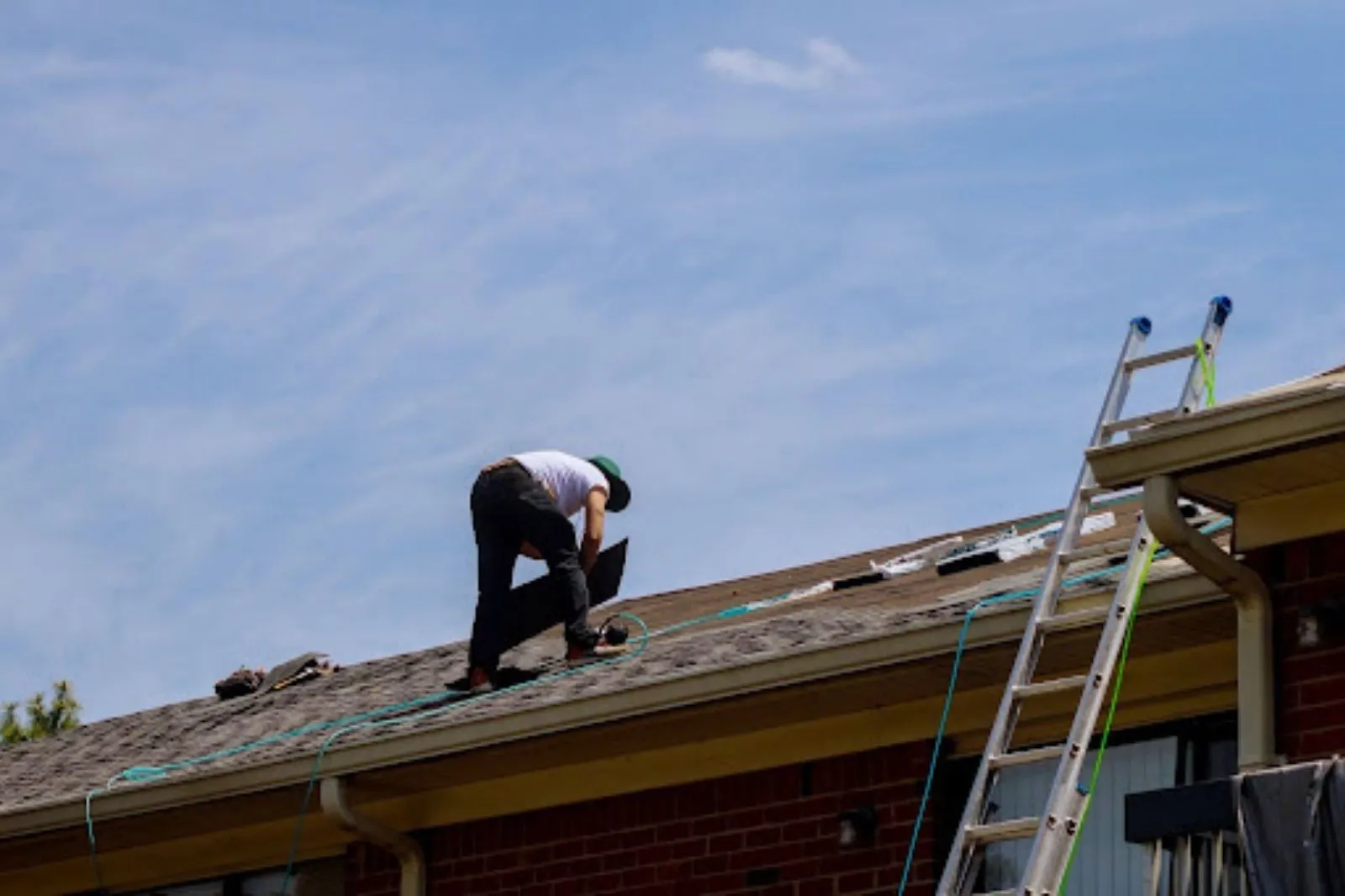
Use these three steps to calculate a realistic roof inspection target based on revenue goals, appointment show rates, and sales-team capacity.
Work Backward From the Revenue Goal
- Determine the monthly revenue target
- Divide it by the average roofing contract value
- Calculate how many signed jobs are required
- Apply the company’s inspection-to-sale closing rate
- Adjust for inspection cancellations and no-shows
Use a Simple Inspection Volume Formula
Required booked inspections = Target completed inspections ÷ Appointment show rate
A roofing company that needs 40 completed inspections and has an 80 percent show rate must book approximately 50 appointments.
Account for Sales Representative Capacity
Inspections per rep per day, drive time, service-area size, estimate preparation, follow-up responsibilities, and installation capacity all set a ceiling on how many appointments the business can realistically handle. Overscheduling reduces inspection quality and closing performance rather than improving them.
How Do You Generate Leads for a Roofing Company?
Roofing companies generate leads through local SEO, Google Ads, Local Services Ads, referrals, neighborhood marketing, partnerships, past-customer campaigns, and lead reactivation. The most reliable approach combines several channels so the company is not dependent on a single platform, storm season, or source of homeowner demand.
Capture Active Demand Through Local SEO
Roof repair and replacement service pages, city and service-area pages, Google Business Profile optimization, customer reviews, project galleries, storm-damage content, and internal linking all help a roofing company reach homeowners who are already searching for a contractor.
Use Google Ads for Controllable Inspection Volume
Paid search can be scaled up or down based on available inspection capacity. High-intent keywords, service-specific campaigns, geographic targeting, call tracking, negative keywords, and dedicated landing pages all improve cost per completed inspection rather than just cost per click.
Use Google Local Services Ads
Local Services Ads capture calls from homeowners actively looking for a local roofing contractor. Fast call response, accurate service areas, review quality, lead dispute management, and booking and completion tracking all determine whether that spend turns into finished jobs.
Build a Referral and Neighborhood Marketing System
Referral requests, yard signs, neighbor mailers, door hangers around active projects, review requests, and completed-project follow-up create a steady flow of demand that does not depend on ad spend or storm activity. This is one piece of a full roofing lead generation system built around multiple, coordinated sources rather than one channel carrying the calendar.
Create Local Partnerships
Real estate agents, property managers, home inspectors, restoration contractors, general contractors, insurance professionals, and commercial facility managers can all become recurring referral sources for a roofing company willing to build the relationship.
Reactivate Old Roofing Leads
Unsold estimates, previous repair customers, old storm inquiries, homeowners who delayed replacement, and leads that stopped responding are often the fastest source of new inspections available, since these contacts already know the company.
Know What You Are Buying Before You Buy a Lead
A shared lead is sold to several roofing companies at once, so the homeowner is already fielding multiple calls. An exclusive lead goes to one company only, and it shows up and closes at a higher rate because the homeowner is not being pulled in five directions at once.
Exclusivity is not the only question worth asking a lead provider. Confirm how the homeowner gave permission to be contacted and how that consent is documented. A roofing company that skips this step can end up with leads that are difficult to reach, unwilling to talk, or a genuine compliance risk under telemarketing consent law.
Create Inspection Demand Outside Storm Season
Roofing companies can generate inspection demand during slower periods by promoting preventive roof assessments, aging-roof evaluations, leak inspections, seasonal maintenance, real estate inspections, and commercial roof programs. These services give property owners a reason to schedule an inspection even when there has not been a recent storm.
- Seasonal roof assessments: spring inspections, pre-winter and post-winter assessments, hurricane-season preparation, gutter and drainage evaluations
- Aging-roof evaluations: reaching homeowners with roofs approaching replacement age through education rather than fear-based messaging
- Leak and preventive maintenance inspections: catching smaller issues before they cause interior damage
- Real estate-related inspections: homebuyers, sellers, agents, and property investors
- Commercial roof maintenance programs: recurring inspections that create predictable appointment volume year-round
Turn More Roofing Leads Into Booked Inspections
Respond While the Homeowner Is Still Searching
Immediate phone calls, automated text acknowledgment, missed-call text-back, after-hours coverage, and clear lead assignment all shorten the window in which a homeowner is comparing other contractors.
Make the Inspection Easy to Schedule
Short forms, online scheduling, clear appointment windows, mobile-friendly landing pages, calendar integration, and immediate confirmation reduce the friction between interest and a booked appointment.
An instant online estimate or quote tool adds another entry point that works outside business hours. A homeowner comparing roofers at 9 PM can request a rough price range or book a time slot without waiting for a callback, which keeps the company in the running instead of losing the lead to whoever answers first the next morning.
Use a Consistent Qualification Process
Property address, roofing issue, active leak status, roof age, recent storm activity, ownership status, and availability are all questions worth asking before an inspection is scheduled. The goal is better appointment quality without adding friction that costs the booking.
How Can AI Be Used to Generate Roofing Leads?
Roofing companies can use AI to improve lead generation by responding to inquiries faster, qualifying prospects, personalizing follow-up, identifying old leads worth reactivating, summarizing calls, and scheduling appointments. AI works best as a support system for marketing and sales teams, not as a replacement for local expertise or personal homeowner communication.
Use AI for Faster Lead Response
Immediate text responses, after-hours chat, missed-call recovery, and appointment-request acknowledgment all reduce the lag between inquiry and first contact.
Use AI to Prioritize Roofing Opportunities
AI can help organize leads by service requested, location, roof age, storm exposure, urgency, and prior engagement so reps spend time on the opportunities most likely to book.
Personalize Follow-Up Messages
Messaging can be adjusted based on whether the homeowner requested repair, replacement, a storm inspection, commercial service, or preventive maintenance, rather than sending the same generic sequence to everyone.
Reactivate Older Database Contacts
AI-supported segmentation can identify unsold estimates, past repair customers, homeowners in affected storm areas, aging-roof contacts, and leads who previously postponed work.
Keep Human Oversight
Automated messages still need review for accuracy, tone, consent, and relevance. AI should shorten response time and improve organization, not turn a roofing company’s outreach into mass, unreviewed messaging.
Reduce Roofing Inspection Cancellations and No-Shows
Use these four practices to set clear expectations, keep homeowners engaged, and reduce avoidable inspection cancellations and no-shows.
Explain What the Inspection Includes
Roof surface assessment, flashing review, vent and penetration checks, gutter observations, photo documentation, and repair or replacement recommendations set expectations before the technician arrives.
Send Multiple Appointment Confirmations
- Confirmation immediately after booking
- Reminder the day before
- Same-day arrival reminder
- Rescheduling link or contact option
Introduce the Assigned Roofing Specialist
Sharing the representative’s name, a photo, an expected arrival window, and company contact information in advance reduces the uncertainty that leads homeowners to cancel or ignore the appointment.
Use Realistic Arrival Windows
Broad or unreliable arrival windows are one of the most common reasons homeowners cancel or fail to answer the door. A specific, honest window performs better than a wide one that looks convenient on paper.
Balance Storm Campaigns With Evergreen Roofing Marketing
Storm demand should add to a roofing company’s pipeline, not replace it. SEO, review generation, Google Business Profile activity, referral marketing, past-customer communication, and evergreen paid campaigns should continue to run even when storm inspections fill the calendar.
Storm inspections, roof repairs, retail replacements, commercial roofing, and maintenance services perform differently and are worth tracking separately. Campaign budgets, service areas, and scheduling availability should reflect the number of inspections the company can realistically complete, not the number of leads a channel can produce.
Ad Genius works with roofing companies to build a full-funnel system rather than treating lead generation and appointment completion as separate problems.
Track the Metrics That Predict Inspection Stability
The most important roofing inspection metrics include lead response time, qualified lead rate, appointment booking rate, inspection show rate, cost per completed inspection, inspection-to-sale closing rate, and revenue by lead source. These measurements show where opportunities are being lost and which marketing channels actually produce roofing work.
- Total leads by source
- Qualified lead rate
- Average response time
- Lead-to-appointment rate
- Booked-to-completed inspection rate
- Cancellation and no-show rate
- Cost per booked inspection and cost per completed inspection
- Inspection-to-estimate and inspection-to-sale closing rate
- Revenue per inspection and revenue by marketing source
- Inspection volume by sales representative and by ZIP code
Cost per completed inspection matters more than cost per lead. A cheap lead is not valuable if it cannot be reached, does not qualify, or never shows up for the appointment. Comparing lead quality by source, search, Local Services Ads, referrals, purchased leads, reactivation, and neighborhood campaigns shows which channels are actually worth the investment.
A 90-Day Plan to Stabilize Roofing Inspection Volume
Days 1 to 30: Fix Tracking and Lead Handling
Define pipeline stages, audit missed calls, measure response times, review booking and show rates, set weekly inspection targets, and identify unworked leads.
Days 31 to 60: Expand Demand Generation
Improve service pages, optimize the Google Business Profile, restructure paid campaigns, launch reactivation campaigns, create seasonal inspection offers, and strengthen the referral process.
Days 61 to 90: Optimize Lead Quality and Capacity
Shift budget toward better-performing sources, reduce low-quality inquiries, improve appointment reminders, refine geographic targeting, compare close rates by source, and forecast future appointment demand.
Common Mistakes That Make Roofing Inspection Volume Unpredictable
- Buying more leads before fixing the response time
- Depending entirely on storm activity
- Turning marketing off once the calendar gets busy
- Measuring form submissions instead of completed inspections
- Failing to follow up with unsold estimates
- Sending generic messages to every contact
- Ignoring past customers
- Expanding beyond the company’s realistic service area
- Optimizing for cheap leads instead of profitable jobs
- Failing to confirm appointments
- Buying shared leads without checking exclusivity or how consent was documented
Build a Roofing Inspection System, Not Just a Lead Campaign
Stable inspection volume does not come from one campaign. More leads do not automatically create more inspections. Lead response and appointment completion matter as much as advertising; diversification protects the business from storms, seasonality, and platform changes, and tracking completed inspections is what actually connects marketing activity to revenue.
Frequently Asked Questions
How Are Roofing Leads Generated?
Roofing leads are generated when homeowners or property managers respond to search results, ads, referrals, social content, direct outreach, local partnerships, or follow-up campaigns. A lead becomes more valuable once the roofing company verifies the service need, confirms the property location, makes contact, and books a qualified inspection.
How Much Should a Roofing Company Pay for Lead Generation?
A roofing company should base its lead-generation budget on cost per completed inspection and acquired customer, not a universal cost-per-lead target. The right amount depends on average project value, closing rate, service type, location, competition, and profit margin. A more expensive lead can be worthwhile if it consistently produces completed inspections and profitable contracts.
What Is the Difference Between a Roofing Lead and a Roof Inspection?
A roofing lead is a person or organization that has expressed interest in roofing services. A roof inspection is a scheduled and completed appointment at the property. Not every lead becomes an inspection, since some inquiries are unqualified, unreachable, outside the service area, or unwilling to schedule.
How Can Roofing Companies Get More Inspection Appointments?
Roofing companies book more inspections by responding quickly, simplifying scheduling, using clear inspection offers, following up across phone, text, and email, and reactivating previous leads. Appointment reminders and realistic arrival windows also help convert booked appointments into completed inspections.
Can Roofing Companies Generate Leads Without Buying Them?
Yes. Roofing companies can generate leads through local SEO, Google Business Profile visibility, referrals, reviews, neighborhood marketing, partnerships, educational content, and database reactivation. These methods still take time and investment, but they reduce dependence on third-party lead sellers.
Ready to Stabilize Your Roofing Pipeline?
If your inspection calendar depends on the last storm or the last ad campaign, the right next step is a conversation about the system underneath it, not another lead source. Talk to a Marketing Strategist today.
Best for established roofing companies ready to build a predictable inspection pipeline, not a short-term lead push.